The League Opium Advisory Committee meeting of 19JAN1929 turned to the drug report for Formosa, then under Japanese control. All participants leaned eagerly forward as Japanese representative Mr Sato disclosed that this report included, for the first time, production of coca leaves and manufacture of crude coca paste. If grown from Javanese coca shrubs these leaves would be twice as strong as Andean coca. Great Britain's representative pointed with puzzlement to the claim that no coca paste, cocaine or coca leaves were exported. Mr Sato assured him that transfers from Formosa to other Japanese Islands weren't exports at all. India's representative congratulated Mr Sato on the drop in opium imports to that island, and others poured on gushing praise.
Formosa opium imports dropped by more than 90%
Sato bragged that despite there being no medical cure for opium addiction, the number of Formosan addicts fell. No new habitués were added as old registered addicts died off, and the younger generation had no interest in opium. Discussion then turned to the report from France with not a soul uttering another word about coca or cocaine on the Taiwan that was then Formosa.
France's committee member, aptly named M. Bourgois, whipped out an additional document (O.C.23(m).13), harrumphing that since the French report, new regulations requiring import certificates and licensing for the innocent few had been passed. The Swiss representative wanted to know why there was no mention of heroin and morphine imports. After all, the British representative knew large amounts of good British heroin and morphine had been shipped to France. Here again, technicality swooped to the rescue in that morphine properly doped with acetic anhydride became DIacetylmorphine, that is, heroin--not acetylmorphine as misspelled on customs forms--highlighting the difficulty of getting good help these days. Coincidentally, the same misspelling had vitiated a previous report, as the Swiss gentleman inconveniently pointed out. This would, the Frenchman opined, require adjournment to get his story sorted out. To make matters even more awkward, the Japanese gentleman noticed that, per the new document, France had exported to Japan 50 kilos of pure cocaine, 35 kilos of morphine and 15 more of heroin, yet no such imports showed in any Japanese records. The British representative proceeded to notice that of the 309 kilos of pure English morphine shipped to France, none showed on French import records. The Indian representative noted that the same new document recorded 302 kilos of French heroin sent to Turkey, which kept no Hague and Geneva-approved records--and another 432 kilos to China, where any such imports were forbidden, and wondered why... This scene was playing out in Geneva a full 44 years before the "lawyer" in a Cheech & Chong comedy skit would try to convince a judge his client had simply found a huge pile of dope on the sidewalk and was taking it to the police station!(link)
The sophisticated Balkan States Chairman suggested this was a good time to examine the British report, giving France's representative some time to come up with a better story.
That same day's newspapers had nothing to say about the Opium Advisory Committee in Geneva. The NYT reported: Rise expected in federal income tax
collections; German Finance Minister Hilferding, discussing Reich budget, warns of deficit. Alien Property Custodian, Howard Sutherland, had turned over to the Rockefeller committee proxies for about 12,000 shares of Standard Oil of Indiana stock The Rochester paper, under Test Your Poison, announced that pocket tests for liquor are
now available… Postmaster Harry S New article about new international airmail, with no mention of drugs sent via mail. ADMIT LIQUOR SALES‑‑12 CLEARED BY JURY‑‑Acquitted
of Conspiracy Despite Court's Charge that Hiring Bartender Constitutes Plot...
The Sydney Australia paper bleated of THE AFGHAN REVOLT… JUGO-SLAV DICTATORSHIP... The Chicago Tribune revealed Federal dry agents find trunk containing 19
bottles Scotch, 6 of gin, 18 of assorted liquors in office of Rep. Denson in
Washington, D.C. The Berkeley paper announced a future War Reparations Meeting in Gay Paree(link) and TROOPS MARCH ON GUATEMALA REBEL FORCES as that economy collapsed.(link) Even more interesting was a p4 editorial on how the next war would last only minutes: "… Someone in Chicago mentioned a new poison gas…
in the possession of all the great nations… so deadly it could wipe out whole
armies or cities within minutes. … so easy to wipe out nations and races.(link) Speaking of which...
Good Reading: Expanded Universe by Robert Heinlein.(link) Published back when nuclear survivalism and protection against attacks were finally replacing prayer, abstinence and shocked amazement as defense strategies, Heinlein tells of and reprints a story he wrote as the League prohibitionism FDR inherited from Herbert Hoover was starting WW2. Heinlein had, in youth, seen how Woodrow Wilson inherited Theodore Roosevelt (and Qing China) Hague prohibitionism just as those policies were starting WW1. The story most resembling the above Berkeley paper editorial is Solution Unsatisfactory. Alerted by German atom-splitting experiments, a Hungarian physicist designed and patented a nuclear reactor. He and a German atom-splitting physicist left Germany after the National Socialist party--backed by the German pharma companies the USA and League were irritating--won the election. Nuclear energy became a topic of practical interest in the U.S., and Heinlein wrote a story titled Solution Unsatisfactory in which a secret weapon... um... reviewer... almost gave away the gimmick and spoiled the story! Whew.
Cool stuff: Mellow Mood Imports has clothes 'n stuff you can dance in.(link) Charleston, North Carolina was where attorney Manly Sullivan was charged with violating the National Prohibition Act. He appealed and won on the argument that forcing him to declare and pay taxes on illegal income was a violation of the Fifth Amendment. The Charleston promptly became America's signature popular dance. This is a family-owned and operated small business in the spirit of American free enterprise.
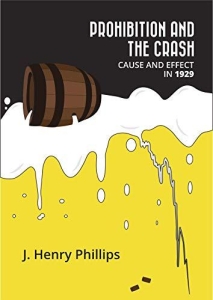
Get the big picture in Prohibition and The Crash on Amazon Kindle in two languages. After this you’ll be able to explain to economists exactly how fanaticism and loss of freedom wrecked the U.S. economy.
Prohibition and The Crash, on Amazon Kindle (link)
ASYLUM APPLICATION FORM i589 INSTRUCTIONS IN PORTUGUESE: INSTRUÇÕES PARA O FORMULÁRIO DE ASILO i589. What we did was make the Political Asylum instructions accessible to and understandable by people accustomed to thinking in Portuguese. This costs one dollar ($1) and you can read it on a cellphone with the Kindle app.(link)
Brazilian Sci-fi from 1926 featuring the adventures of a Rio de Janeiro man-about-town and the beautiful daughter of an elderly scientist–touting alcohol prohibition, eugenics and racial collectivism. Go to Amazon.com and look inside America’s Black President 2228 by Monteiro Lobato, cover art by Rene Bueno, translated by J Henry Phillips (link)







No comments:
Post a Comment