Of the nearly 3 tonnes of dope seized worldwide in 1927, 89% were opium, 7% hemp, 3.6% morphine and 0.4% cocaine
While New Yorkers slept in the wee hours of 19JAN1929, the Opium Advisory Committee assembled at Geneva, Switzerland for the 5th Meeting of its 12th Session to examine drug trade reports for the year 1927. The delay was mostly for foot-dragging by weak nations curious to find out what sort of coercion was planned for them, while concealing details of their own drug dealings. Fourth on the Agenda was the USA, and the Committee Chairman recalled that the summary of this report had been considered at the close of the last Session--meaning 1928. Speaking for the United States, Mr John Kenneth Caldwell briskly offered to distribute copies of the 1928 report within 2 to 3 days. The Chairman was diplomatically dismissive and turned to the business of Formosa--a protectorate of Japan at the time which nowadays answers to Taiwan. Mr Sato explained that this 1927 report was the first in which figures for grown-in-Japan coca leaves and crude cocaine paste were disclosed--awakening keen interest in the American observer. But that 1927 American report was MOST informative...
The American report for 1927 opened with the merits of a 22JUN1927 law regulating "narcotics" in the formerly freewheeling Virgin Islands, and a 03MAR1927 law establishing yet another prohibition bureau--this one in the Treasury Department. The report commended New York State for its 05APR1927 drug law pursuant to the Hague "Opium" convention--a convention nobody wants to admit was casus belli for WW1. With some hubris the report went on about new U.S. import form regulations beginning at foreign ports were implemented after June. Some idea of how effective these regulations were in stopping exports to the USA leap out of a newspaper report showing that July, 1927 imports from Europe were 90% lower than those of July 1926.(link) Sure enough, on 01SEP1927 heroin-exporting France slapped "prohibitive" tariffs on U.S. exports in a tit-for-tat reprisal.(link)
Certainly the USA had money to burn on narcotics agents. Appropriations were 1.3 million gold dollars, each worth 1.67 grams of gold--over two metric tonnes of gold at 2026 prices, $336,000,000. Still, the point we need to cover is how much financial havoc that much money can inflict on global finances. According to the U.S. report, that figure was a but a drop in the bucket, because various factors, enumerated in the full report, "combine to render combine to render practically impossible the task of the United States enforcement officers, operating under present laws, to curb effectively the introduction of narcotic drugs into the country." By European lights, narcotics in U.S. verbiage means anything the government does not like, effectively including beer! Here are samples from September 1927 newspapers circulating while the League of Nations was meeting in 1927: New Jersey Prohibition Administrator Hanlon on
removal of confiscated drugs from government warehouse. NY Times, 21AUG1927 p5c4. Dry agents attempt warrantless search to close down brewery.(link) U.S. Official shot in Dresden, Germany.(link)
Dry America had issued warnings in 1926 that its "efforts to control the consumption of dangerous drugs within territory subject to its jurisdiction" (which now included the Philippine Islands, Samoa, Guam, Wake and Hawaii) "were being nullified to an alarming extent by the activities of smugglers who appeared to find little difficulty in acquiring large quantities of the drugs for the purpose of introducing them secretly into the United States." Then came the kicker: "there could be no great improvement in this situation until there was a control in countries other than the United States over the manufacture and export of narcotic drugs which would prevent their sale to any but licensed importers..." To dispel any doubt as to whose problem America was about to make this, the report asserted, with particulars, that: "several large seizures of drugs, presumed to be of European origin" had recently been made. As evidence of U.S. stringency in enforcing a prohibitionist Monroe Doctrine on economically weakened neighbors, NONE of those neighbors were extracting morphine from opium, and only two South American countries manufactured cocaine from coca paste or leaves.
The Big Stick was brandished thus: 93.7% of cases tried resulted in convictions which, laid end to end, added up to 7088 survivor years in prison. Fines and "tax" settlements for 1926 & 1927 added up to 798,000 gold dollars worth 3,990,125 gold Swiss francs. Rockefeller gifts to the League in 1926 amounted to nearly 99000 francs, and outlays for Opium Advisory Committee sessions, printing, cables and telegrams were but 28,500 gold francs. American penalties revenue alone was 70 times as much as the yearly cost to the League for Opium Advisory committee activities--including papering them over with sanctimonious guff about traffic in women and children! At year's end 1926, the League cash account stood at 1.201,189.65 gold francs or just over 240,000 gold dollars. From 1920 through 1926 the League could not collect $1.6 million in member dues from countries whose economies had been wrecked or weakened by war and prohibition laws--according to the League Official Journal. China was over a million dollars in arrears and Peru another $281,000 gold--BEFORE new U.S. "dope" regulations knocked 90% off European exports to Dry America. Given Europe's crisis condition, is it any surprise the U.S. wasted no time in infiltrating and taking control of the League of Nations?
Closing observations in the U.S. report went straight to sensitive nerves affecting at least seven countries and colonies: the cocaine yield from Java leaves was approximately twice the yield obtained from Peruvian leaves. Dutch botanists had bred superior coca shrubs on Java, and any coca grown on nearby Japanese possessions was likely twice as strong as South American strains. More ominously, the US Treasury Department had in September of 1927 sent narcs and snoops to connect with European narcs and snoops to swap information.The Federal narcotics Control Board was obliged to take into
consideration the possibility of disturbed political conditionsin or around the
crude opium-producing countries interfering with shipments to the United
States. Such factors concern any national emergency
which would cause a sudden increased demand for the
drugsfor medicinal purposes. Europeans understood all too clearly that this was precisely what had occurred as signatures were gathered in July, 1914 to impose Hague limitations on production and trade worldwide. Small wonder the Committee sought to downplay that stale American report.
*-*-*
Odd reading: The CIA as Organized Crime: How Illegal Operations Corrupt America and the World, by Douglas Valentine.(link) The small parts I was familiar with seem accurate to me. The rest of it has the ring of communist propaganda but that does not make it necessarily untrue. Just as intellectuals of the communist persuasion regard all non-communists as the other half of a binary blob, whether libertarian, fascist or fanatically religious, so for the sake of simplicity I regard them as half of a non-libertarian blob, the other half being fascists, national socialists and/or religious fanatics dedicated to the initiation of deadly force. The differences among them appear negligible to me. Yet it would not surprise me if the rest of Valentine's story is true. The book does provide insights into the vocabulary and mindset of these spooks and their competitors.
Cool stuff: Mellow Mood Imports has clothes 'n stuff you can dance in.(link) Charleston, North Carolina was where attorney Manly Sullivan was charged with violating the National Prohibition Act. He appealed and won on the argument that forcing him to declare and pay taxes on illegal income was a violation of the Fifth Amendment. The Charleston promptly became America's signature popular dance. This is a family-owned and operated small business in the spirit of American free enterprise.
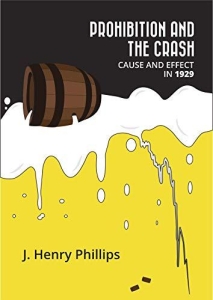
Get the big picture in Prohibition and The Crash on Amazon Kindle in two languages. After this you’ll be able to explain to economists exactly how fanaticism and loss of freedom wrecked the U.S. economy.
Prohibition and The Crash, on Amazon Kindle (link)
ASYLUM APPLICATION FORM i589 INSTRUCTIONS IN PORTUGUESE: INSTRUÇÕES PARA O FORMULÁRIO DE ASILO i589. What we did was make the Political Asylum instructions accessible to and understandable by people accustomed to thinking in Portuguese. This costs one dollar ($1) and you can read it on a cellphone with the Kindle app.(link)
Brazilian Sci-fi from 1926 featuring the adventures of a Rio de Janeiro man-about-town and the beautiful daughter of an elderly scientist–touting alcohol prohibition, eugenics and racial collectivism. Go to Amazon.com and look inside America’s Black President 2228 by Monteiro Lobato, cover art by Rene Bueno, translated by J Henry Phillips (link)






No comments:
Post a Comment