Showing posts with label fractional reserve banking. Show all posts

Monday, December 16, 2024

Causes of 1980s Recessions, Crash


The blue line is unemployment, grey bars recessions. We now examine 1980-1990. 

On 19 February 1980, the Commission on Narcotic Drugs decided to ask all governments to implement to the fullest extent possible sweeping countermeasures against drugs declared illegal, and recommended crackdowns: 3 (XXVIII) ...on financial assets and transactions related to illicit traffic… and subsidized equipment and technical assistance to prohibitionist countries.(link) The muckraking journalists on 60 Minutes--who stirred national panic after a TMI reactor malfunction injured no one--promptly fanned hysteria against Bolivian plant drugs neither habit-forming nor addictive.(link) The recession in 1980--like the Great Depression caused in part by League of Nations prohibitionism--is thus clearly discernible in the first quarter of 1980. Inflation went to 13%, then 15% and the San Francisco Fed presented an unconvincing theory reminiscent of Herbert Hoover's "explanation" of the German crisis of 1931.(link) (link)  On Wednesday, 10OCT1979 a market crash--the worst since the 1973 Commission on Narcotic Drugs meetup sparked drug dragnets, money-laundering confiscations.(link) These segued into market crashes and recession in 1974-5.(link)  As marijuana and cocaine replaced alcohol, traffic fatalities fell. But as addictive opiates like what alcohol prohibition brought to America in the 1920s replaced unobtainable LSD, CDC charts show deaths by drug poisoning increased steadily. 

Narcotic poisoning deaths rise as safer drugs become unobtainable(link)

Reagan as governor had banned LSD and ramped up bans on marijuana, neither of which is habit forming or has caused a single death. Addictive opiates, amphetamines and South American plant stimulants replaced relatively harmless modern drugs. Prison populations accumulated rapidly, serving 5-6 years on average, so victimless criminals incarcerated in 1981-82 accumulated through 1986-88. So by 1986 there were about 6 victimless drug convicts in prison for every person poisoned thanks to heroin having replaced LSD, mescaline, MMDA and psilocybin on black markets.

Recessions and prison-packing as Reagan replaced Carter: USDOJ (link)

The function of the Federal Reserve System is to soften and disguise the financial impact of sumptuary legislation making a crime of some production and trade. When in 1907 a spate of  state and federal legislation banning liquor, beverages and adding regulations on drugs--and even foods such as sardines--a Banking Panic crippled the nation's banks. Influential bankers improvised a network of clearinghouses for interbank payments so business could continue. Broader prohibition laws pressed forth by The Hague, as China closed its borders to such shipments, caused Opium gluts and war in Balkan States. Pressure to use these laws and the Harrison Act to take market share from Germany--leading producer of non-addictive local painkiller, cattarh treatment and refined narcotics--caused WW1. Precisely because its role is to facilitate the expansion of economy-destroying prohibitionist coercion, it wouldn't do for the Fed to advertise the fact. The Fed serves as a sort of anesthetic to lessen the pain of prohibition and wars wrecking the economy while inventing ways to dissemble the coercive causes of that wreckage. In this sense the Fed is a sort of opium to keep the masses from realizing that bans on trade create poverty. So why the recession from the second half of 1981 through most of 1982? 

Facts are the tersest indicators. One of these is that Crashes are what happen when folks who know that's going on realize that a crisis is about to happen. Picture children playing on railroad tracks. Suddenly they jump off, and lo! A train comes along. Every Crash is investors realizing a huge disaster is coming. The Depression or recession that follows the Crash is the actual cause. The Crash is merely the harbinger. In our last episode, Jimmy Carter inherited fallout from Nixon's 1969 Operation Intercept and War on Drugs and June 1971 War On Drugs. There was also the Commission on Narcotic Drugs zombie-hunt held at Geneva early in 1973.(link) Nobody ever mentions that. When was the last time you heard about the League of Nations Opium Advisory Committee meeting in Geneva from January 17th to February 2nd, 1929 to urge politicians worldwide to pay men with guns to rob, kill or cage people over opium--AND things that are neither habit-forming nor narcotics at all? Search for it! 

In 31 years of searching newspapers, the only mention of this important, altruistic, subsidized international movement in print media was the following entry in the New York World Almanac for 1930, giving the events for the preceding year, 1929, the year of the Great Stock Market Crash: 

Feb. 2  At Geneva, the League of Nations Advisory Commission on Opium, in its report, names great chemical firms which have been frequently caught in the illegal traffic, names League members which have refused to cooperate, and reveals that manufacturers have found a way to evade treaty restrictions by converting narcotics into chemical salts which can easily be changed back to their original form. It declares that there is a movement for establishment of more drug factories in Turkey, Hungary, Persia, Russia or Jugo-Slavia, where narcotics are either beyond international control or opium is easily obtainable. (NY World Almanac 1930  p.98)
Here are some more facts you have probably never seen in newspapers or on teevee. 

15JAN1963: JFK Executive Order 11076 established an Advisory Commission on Narcotics and Drug Abuse to end 31DEC1963. (link) It never ended. 

Shortly after Gerald Ford pardoned Nixon for all high crimes and misdemeanors with a $60,000 pension, $400,000 in transition expenses and $12,000 for a valet, a financial crisis developed in Belgium--and everywhere else.


14 October 1974, Gadsden Times 13/35 Unauthorized dealings in foreign currency could cost bank millions. BRUSSELS, Belgium – Belgium's second-largest bank said today it expected losses of $15 million to $37.5 million from unauthorized dealings in foreign currency. The Banque de Bruxelles and the Belgian finance ministry reported Monday that four of the bank's dealers had made "irregular, unrecorded and unauthorized foreign exchange transactions" of US dollars and German marks. The prosecutor's office said that the dealers are being charged with falsification of accounting documents. (link). 

Ten pages earlier in that same issue, a sudden, unexplained financial crisis with graphs showing crashed stock markets in the USA, Germany, France, Hongkong, London, Italy, Holland, Australia, Canada and Japan.(link) This developed eight months after wheels began turning at the Feb-March Commission on "Narcotic" drugs third session.(link) Bolivia did send observers to the dog-and-pony show. All of a sudden, revolts broke out in Bolivia and Argentina, neither of which produced or transported anything other than non-habit-forming coca products tarbrushed as "narcotics" by bureaucratic fiat. Repeats of this rally for deadly force were promised for 1976 and 1978!

Violent revolts in Bolivia and Argentina were a clue that whatever spun out of Belgium to damage the world's economy had to have something to do with cocaine. The Domestic Council Drug Abuse Task Force, chaired by Vice President Nelson Rockefeller in a White Paper concluded marijuana was a minor problem and cocaine was not a problem. “Cocaine,” the report stated, “is not physically addictive... and usually does not result in serious social consequences, such as crime, hospital emergency room admissions, or death.”(link) Republicans decided that this--not the JFK assassination coverup, Nixon pardon or Dole on the ticket--was a mistake. Just before the election, news broke that Europeans had quit taking narcotics. Europeans preferred taking LSD just as Americans in 1966-70 had switched from other drugs to LSD.(link) The Carter Administration, mired in Iran crises, desperately tried enforcing victimless crime laws, but succeeded only in causing another Crash.(link) Mohammedan fanatics in effect helped elect Reagan, so the stage was set for as dramatic a change in prison populations as that wrought by Herbert Hoover when the world population was 2 billion.(link) 


Next up: 1981 German "narcotic" law passed in a replay of 13JUL1931; recession, cyanide-laced Tylenol and Just-Say-No Reaganjugend.

Bad reading: 1931: Debt, Crisis, and the Rise of Hitler by Tobias Straumann.(link) This is the only book aside from the Herbert Hoover Presidential Papers Supplement on the Moratorium that even attempts to provide a detailed explanation of the crisis that shattered Germany's banking system in May, June and July of 1931.(link) Straumann, like Hoover and his Secretaries, elides all mention of League of Nations efforts under the Versailles Treaty to get Germany to sign a "Narcotics" Limitation Convention broader and stricter than the 1912 Hague Opium Convention or the 1925 Geneva Convention combined. Indeed, Germany was still the world leader in chemistry and pharma and relied on those wanings to pay war reparations to the European WW1 Allies. It strains credulity to imagine that Straumann or President Hoover did not understand exactly why these looming restrictions wrecked the German economy. Indeed, these looming restrictions and continuing exactions were precisely what had, since the start of September 1929, worried investors to the point of capital flight from Germany. Straumann closely repeats Hoover's story, down to the omissions and elisions memory-holing this most important overarching facet of the political, financial and diplomatic context of the occasion. A member of the Hoover Administration or the I.G. Farben conglomerate eager to keep the entire drug-limitation aspect of the crisis from public scrutiny could hardly do better than have someone like Straumann corroborate the government's carefully circumscribed tailoring of the facts. Stonewalling the facts certainly helped the National Socialist Party rise from obloquy to power inside of two years.  


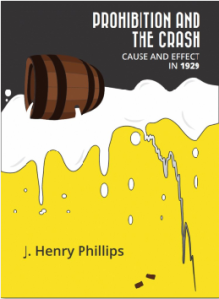
Find out the juicy details behind the mother of all economic collapses. Prohibition and The Crash–Cause and Effect in 1929 is available in two languages on Amazon Kindle, as cheap as a pint of craft beer.
What caused The Crash?

Brazilian Sci-fi from 1926 featuring the Hollywood-style beautiful daughter of a scientist touting prohibition and racial collectivism in America’s Black President 2228 by Monteiro Lobato, translated by J Henry Phillips (link)

Three dollars on Amazon Kindle

Brazilian blog… Expatriotas

American blog… Libertariantranslator, with contact form

ASYLUM APPLICATION FORM i589 INSTRUCTIONS IN PORTUGUESE: INSTRUÇÕES PARA O FORMULÁRIO DE ASILO i589. What we did was make the instructions accessible to and understandable by people accustomed to thinking in Portuguese. This costs one dollar ($1) and you can read it on a cellphone with the Kindle app.(link)


Find out the juicy details behind the mother of all economic collapses. Prohibition and The Crash–Cause and Effect in 1929 is available in two languages on Amazon Kindle, as cheap as a pint of craft beer.

What caused The Crash?

Brazilian Sci-fi from 1926 featuring the Hollywood-style beautiful daughter of a scientist touting prohibition and racial collectivism in America’s Black President 2228 by Monteiro Lobato, translated by J Henry Phillips (link)

Three dollars on Amazon Kindle

Brazilian blog… Expatriotas

American blog… Libertariantranslator, with contact form

ASYLUM APPLICATION FORM i589 INSTRUCTIONS IN PORTUGUESE: INSTRUÇÕES PARA O FORMULÁRIO DE ASILO i589. What we did was make the instructions accessible to and understandable by people accustomed to thinking in Portuguese. This costs one dollar ($1) and you can read it on a cellphone with the Kindle app.(link)


Wednesday, July 12, 2023

Volstead Act Collapse III, 15-21


Every bank in the USA was shut BEFORE March 1933

thanks to Bert Hoover opening corporate tax returns to scrutiny by State officials 

Sec. 16. Any tax payable upon alcohol under existing law may be collected either by assessment or by stamp as regulations shall provide; and if by stamp, regulations shall issue prescribing the kind of stamp to be used and the manner of affixing and canceling the same.

Sec. 17. When any property is seized for violation of this title it may be released to the claimant or to any intervening party, in the discretion of the commissioner, on a bond given and approved.

Sec. 18. All administrative provisions of internal-revenue law, including those relating to assessment, collection, abatement, and refund of taxes and penalties, and the seizure and forfeiture of property, are made applicable to this title in so far as they are not inconsistent with the provisions thereof.

Sec. 19. All prior statutes relating to alcohol as defined in this title are hereby repealed in so far as they are inconsistent with the provisions of this title.

Sec. 20. That it shall be unlawful to import or introduce into the Canal Zone or have in one’s possession or under one’s control within the Canal Zone, any alcoholic, fermented, brewed, distilled, vinous, malt, or spirituous liquors, except for sacramental, scientific, pharmaceutical, industrial, or medicinal purposes, under regulations to be made by the President, and any such liquors within the Canal Zone in violation hereof shall be forfeited to the United States and seized: Provided, That this section shall not apply to liquor in transit through the Panama Canal or on the Panama Railroad.

That each and every violation of any of the provisions of this section shall be punished by a fine of not more than $1,000 or imprisonment not exceeding six months for a first offense, and by a fine not less than $200 nor more than $2,000 and imprisonment not less than one month nor more than five years for a second or subsequent offense.

That all offenses heretofore committed within the Canal Zone may be prosecuted and all penalties therefor enforced in the same manner and to the same extent as if this Act had not been passed.

Sec. 21. Titles I and III and sections 1, 27, 37, and 38 of title II of this Act shall take effect and be in force from and after the passage and approval of the Act. The other sections of title II shall take effect and be in force from and after the date when the eighteenth amendment of the Constitution of the United States goes into effect.

F H Gillett

Speaker of the House of Representatives.

Thos. R. Marshall

Vice President of the United States and President of the Senate.


In the House of Representatives of the United States.

October 27, 1919.

*-*-*
These wartime then peacetime seizure and forfeiture clauses eroded the U.S. economy over the course of fourteen years. The Bill of Rights melted before them as the Reconstruction Amendments  did when Klan terrorism in the Southern States and Northern reaction against Republican Comstockism combined to unseat Republican control of government. This damage was accelerated by misdefining and prohibiting non-addictive stimulants and lumping them in with habit-forming narcotics. Exporting coercive meddling in trade and production the world over through Versailles Treaty imposition of the Hague Convention followed by planet-wide exportation of prohibitionist coercion until WW2 resulted is up next. The overlap of Volsteadism with the violence of international law will focus on  news, laws, economic and financial crashes and their explanations--especially the way this applied fanaticism brought war with Germany and Japan. 

*-*-*
Good Reading: The Night of January Sixteenth, by Ayn Rand. (link)
That was the date the Wartime Prohibition law became national prohibition of trade, transportation and production, with Federal economic planning adopted at every level to prop it up as it eroded the entire economy and banking system. This novel springs from the legal conundrums created when prohibition eplaced free trade and production.

Good References: The Shaffer Library of Drug Policy. (link) The library covers everything EXCEPT the causal relationship between the violence of prohibitionist law and economic contraction, banking panics, liquidity crises, recessions, depressions and wars. For an introduction to that see Prohibition and The Crash. 


Find out the juicy details behind the mother of all economic collapses. Prohibition and The Crash–Cause and Effect in 1929 is available in two languages on Amazon Kindle, each at the cost of a pint of craft beer.

What caused The Crash?

Brazilian Sci-fi from 1926 featuring the usual beautiful daughter of a scientist touting prohibition and racial collectivism in America’s Black President 2228 by Monteiro Lobato, translated by J Henry Phillips (link)

Three dollars on Amazon Kindle

Brazilian blog…

American blog…

Tagged: prohibition, confiscation, asset forfeiture, initiation of force, blackouts, energy crisis, liquidation, liquidity, bankruptcy, Crash, Depression, communism, inviting attack, treason, economic collapse,

Tags: asset forfeiture, bankruptcy, blackouts, communism, confiscation, Crash, Depression, economic collapse, energy crisis, initiation of force, inviting attack, liquidation, liquidity, prohibition, panics, fractional reserve banking,


Monday, July 3, 2023

Volstead Act Collapse III, 12-14, General Provisions


Panic cartoon during 1905 China boycott of U.S. goods

The U.S. responded with the Pure Food and Drugs Act of 1906 which required morphine labeling and caused The Panic, then the Hague Opium Convention of 1909, which caused WW1. Surely you recall these from history class, no?

GENERAL PROVISIONS.


SEC. 12. The penalties provided in this title shall be in addition to any penalties provided in title 2 of this Act, unless expressly otherwise therein provided.

SEC. 13. The commissioner shall from time to time issue regulations respecting the establishment, bonding, and operation of industrial alcohol plants, denaturing plants, and bonded warehouses authorized herein, and the distribution, sale, export, and use of alcohol which may be necessary, advisable, or proper, to secure the revenue, to prevent diversion of the alcohol to illegal uses, and to place the nonbeverage alcohol industry and other industries using such alcohol as a chemical raw material or for other lawful purpose upon the highest possible plane of scientific and commercial efficiency consistent with the interests of the Government, and which shall insure an ample supply of such alcohol and promote its use in scientific research and the development of fuels, dyes, and other lawful products.

SEC. 14. Whenever any alcohol is lost by evaporation or other shrinkage, leakage, casualty, or unavoidable cause during distillation, redistillation, denaturation, withdrawal, piping, shipment, warehousing, storage, packing, transfer, or recovery, or any such alcohol the commissioner may remit or refund any tax incurred under existing law upon such alcohol, provided he is satisfied that the alcohol has not been diverted to any illegal use: Provided, also, That such allowance shall not be granted if the person claiming same is indemnified against such loss by a valid claim of insurance.

*-*-*

The Association Against the Prohibition Amendment organized to oppose the 18th amendment because it damaged the economy. The mention of revenue in Section 13 above was a sop to all who fretted for good reason. The alcohol tax had brought in about 30 to 40% of all federal tax revenue prior to the amendment's enactment, and personal income tax rates were raised to compensate for the lost revenue. Yet none of the pro or con activists reckoned on the collapse of credit from padlockings, confiscations, asset forfeiture, tax-evasion fines and prison sentences plus the increased income tax would do to the fractional reserve banking system once accountholders withdrew their deposits. Some withdrew to avoid confiscation, others to escape the bank collapse when bootleggers suddenly withdrew their deposits in the same bank. 

Good Reading: The Scramble fo China by Robert Bickers. (link) Foreign Devils, our ancestors, began hauling Indian opium to China in 1808, when the drug was a chi-chi luxury. Like othr luxuries then and now, overreaction, envy, superstition and cussedness fanned it into a crisis all out of proportion. The Engish is impeccable, the writing subtle, economical and powerful. Yet the author skips what to Americans is a key sequence of events leading to the Species circular, the Central Bank struggle and the Panic of 1837. The Foreign Devils knew in March they were unwelcome and sure enough were asked to leave in December. Nor is there anywhere in the literature an accounting of how the Emperor's displeasure affected American opium traders, and through them worsened the effect of the British withdrawal of capital to arm for the Opium Wars. But the book is nevertheless a worthwhile read and includes a charming history of early Singapore.

Our Man In Tokyo is another good book I'm still reading. Already it is clear the author ignores events in Geneva which led to the 1929 Crash, Hoover's appointment of Harry Anslinger and the dumping of narcotics in These States to raise reparations money, pay war debts, rearm Germany and strengthen Japan's huge income from export of stimulants the U.S. sought to prohibit all over the world. This is a deeply ingrained pattern. On the one hand the USA commandeers other governments into armed prohibition of drugs unimportant before they were banned by the Quing. Yet with all the money and coercion invested, major events take place in an eerie media silence. Even the dates of League of Nations Opium Advisory Committee sessions are difficult to ascertain without contacting Geneva and signing a nondisclosure form. 


Find out the juicy details behind the mother of all economic collapses. Prohibition and The Crash–Cause and Effect in 1929 is available in two languages on Amazon Kindle, each at the cost of a pint of craft beer.

What caused The Crash?

Brazilian Sci-fi from 1926 featuring the usual beautiful daughter of a scientist touting prohibition and racial collectivism in America’s Black President 2228 by Monteiro Lobato, translated by J Henry Phillips (link)

Three dollars on Amazon Kindle

Brazilian blog…

American blog…

Tagged: prohibition, confiscation, asset forfeiture, initiation of force, blackouts, energy crisis, liquidation, liquidity, bankruptcy, Crash, Depression, communism, inviting attack, treason, economic collapse,

Tags: asset forfeiture, bankruptcy, blackouts, communism, confiscation, Crash, Depression, economic collapse, energy crisis, initiation of force, inviting attack, liquidation, liquidity, prohibition, panics, fractional reserve banking

1929 League Opium Meeting 9

Mussolini's 1927 message to Italians in the USA, at 12min ( link ) The September 22 Opium meeting in Geneva opened with boring analyses...