Saturday, October 3, 2026

1929 League Opium Meeting 10


Committee members are examining the annual drug reports sent in to the League of Nations, almost all of them from 1927 


Geneva, Switzerland, 12JAN1929: Swiss delegate Dr Carrière set the tone by admitting the Swiss figures for morphine were missing, and the Chairman responded by giving the wrong date for the Geneva Drug Convention having come into force as ratified. France's man admitted that there were errors in their figures for heroin imports and blamed it on stocks left over from 1926. Amounts were also misreported in figures for drugs sent from Switzerland to Japanese Kwantung holdings within China inherited from the Germans as part of WW1 settlements of accounts, but the Japanese representative assured his colleague the figures were correct when viewed from the proper perspective. On the heels of the previous meeting, at which discrepancies large enough to be humorous had come to light, these exchanges led to item 302, namely, speculation as to how the League Secretariat ought to react to clearly incorrect figures in reports handed in. The formula worked out in 1925 did not seem to be working. 

Italy's pedantic and excitable Senator took this as his cue to distribute criticism and backed a colleague's suggestion that explanatory footnotes be added by way of interpretation, explaining that he did not wish to bring any reproach upon the Secretariat, then added that qualified technical statisticians ought to be resorted to lest incorrect figures reflect poorly on the quality of the League's work--this while airily endorsing the wisdom of the American-invented Central Board's approach to these measurements as an example worth emulating.  Kibitzing for the Opium Section, Prof. Hall pointed out that the discrepancies documents were not publicly circulated, so adverse publicity of some thirty cases was not a pressing concern, and protocol was being followed. Yet Senator Cavazzoni now worried that it would take until 1929--six years from when the Committee had begun its work--for further light on the statistical tables!  When India's representative pointed out that Italy's statistical report had arrived several months late, the Senator became sulkily petulant at the very idea that his country might share some of the blame for discrepancies he'd been harping on. 

1929 was in fact confirming what everyone conversant with trade in pharmaceuticals had pointed out in 1924! Netherlands representative Van Wettum had been called upon to produce an analysis of the problems confronting coca and cocaine--which the Netherlands had switched to as less exploitative and less harmful than opium the previous century. His plan called for a 10% reduction of production (to humor rabid Americans) but with a European-style cartel and no competition from synthetic cocaine--a regular Adam Smith form of mercantilism. Europeans who drafted alternative plans did not expect coercion to elicit honest statistics.  Other Europeans drew up plans and draft treaties, all of which fell shy of American demands. 

On 25MAY1923 Bishop Brent addressed the League of Nations Opium Advisory Committee and said: "In this or any other matter pertaining to human welfare, if the question of revenue or financial profit is allowed to play any part whatever except that of the lowly servant of science, morals and religion, it becomes a debauching influence, corrupting men's minds and perverting their morals. … Money is indeed a root of all evil. As with individuals, so with Governments." This was his way of warming up the room in preparation for the American pitch to cure Europeans and Asians the way American waterboarding cured the Filipinos... Europeans understood that fanatics were in charge of  America.  On 05FEB1923 the Opium Advisory Committee 4th Session report containing talk of limitation of production was approved by the League Council. The 4th Session had begun 04JAN1923 and German hyperinflation accelerated the entire time before Brent's ravings had removed all doubt. Germans recalled that since passage of the antidrug Jones-Miller Act of 26MAY1922, Versailles Article 23 was being weaponized the way the Hague Convention was weaponized after the antidrug Harrison Act of 1914--then came World War One. 

Interesting reading and media: Opium to Java by James Rush I read long ago. Google now has it posted as a Google book.(link) I was surprised to learn that colonial Dutch became disillusioned with revenue opium as a "reproach to a Christian nation" and switched to coca shrubs transplanted from South America as a replacement crop. National Geographic covered Netherland Indies coca production and Balkan opium farming all the while Sino-American prohibition campaigns caused economic and political crises escalating into World War 1. This included articles by Herbert Hoover. Yet search engine bots are programmed to feign incomprehension and sideline searches on the subject. I finally queried "Was any coca ever grown on Java?" The spell was broken and revealed this Youtube video: 


Get the big picture in Prohibition and The Crash on Amazon Kindle in two languages. After this you’ll be able to explain to economists exactly how laws against production and trade wrecked the U.S. economy.
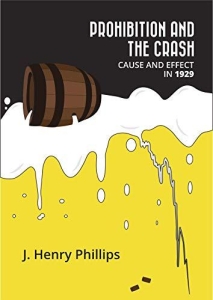
ProhicrashAmazon

Prohibition and The Crash, on Amazon Kindle (link)

ASYLUM APPLICATION FORM i589 INSTRUCTIONS IN PORTUGUESE: INSTRUÇÕES PARA O FORMULÁRIO DE ASILO i589. What we did was make the Political Asylum instructions accessible to and understandable by people accustomed to thinking in Portuguese. This costs one dollar ($1) and you can read it on a cellphone with the Kindle app.(link)

Comment at Libertariantranslator or LIBtranslator, my political economy blog at https://libertrans.blogspot.com/

Brazilian Sci-fi from 1926 featuring the adventures of a Rio de Janeiro man-about-town and the beautiful daughter of an elderly scientist–touting alcohol prohibition, eugenics and racial collectivism. Go to Amazon.com and look inside America’s Black President 2228 by Monteiro Lobato, cover art by Rene Bueno, translated by J Henry Phillips (link)

Three dollars on Amazon Kindle

I also produce books and articles in Portuguese, plus my own blogs using U.S., Australian, Canadian, Chinese, English, European and South American historical sources at http://www.expatriotas.blogspot.com or www.amigra.us and in English at http://Libertariantranslator.wordpress.com (link)

This financial history blog, http://www.Libertrans.us, in Portuguese is Expatriotas for Brazilians, readable at www.criseeconomica.com (link)

Do you need to contact a certified Translator or Interpreter?

Está procurando tradutor ou intérprete credenciado?

Background and context for the U.S.-caused 1931 Panic that raised Hitler to power in Germany


Wednesday, September 23, 2026

1929 League Opium Meeting 9


Mussolini's 1927 message to Italians in the USA, at 12min (link)

The September 22 Opium meeting in Geneva opened with boring analyses of statistical tables for raw opium extracted from 1927 reports. Discrepancies such as the 7-tonne mismatch in figures for Indian opium exports to Hong Kong and imports declared there amounted to an 80% error. This, an expert explained, was because a mere 21 metric tonnes had been overlooked--an honest mistake. Another such query disclosed that all the morphine manufactured in India came from confiscated opium and vat washings. 

Persia's report was even more entertaining. Those figures showed 360 tonnes exported to Great Britain in 1926, and 0.8 tonnes in 1927, while British figures indicated not a single gram had been imported in either case--to the perplexity of the Italian Senator. Great Britain's man explained that Great Britain and the British Empire were different things, and that Sarawak and the Straits Settlements near Singapore had imported 146 tonnes, which brought the figures almost into hailing distance of one another. India's man reported that Persian statistics showed large exports to India, the Netherlands and France year after year, when in fact India had imported zero and the other figures were likewise fabrications. Other figures, such as for the leased Territory of Kwantung, China--taken from the Germans and handed to Japan after WW1--also generated figures too obscure to be given credit.  Figures for "medicinal opium" likewise failed to match in their various versions. Salts of morphine amounts traded between France and Switzerland differed by 2.3 tonnes but factors of 2 and 3 were explained away by bookkeeping methods, gross versus net weights and so on, which resulted in smaller ratios. Interestingly, France imported all its codeine from Switzerland and Germany. 

The Italian Senator then tried to put Japan on the spot was rebuffed with reminders that all of that had been carefully explained in Japanese reports for 1924 and 1924, citing chapter and verse. Indeed, it was on 24APR1924--fifteen years and thousands of Klan marches after Jack Johnson won the boxing championship--that Dutch representative Van Wettum tediously explained that with regard to non-addictive cocaine, once impractical legislation has created a smuggling industry, that smuggling could not be overcome, and that "the requirement amounts cannot be fixed in any reliable way." These laughable 1927-1929 reports merely confirmed predictions he'd made five years earlier. Frustrated, the Committee went into private session. 

Next on the agenda was the same limitation of global production the Americans had pushed in 1924, only repackaged with a shiny new label as the "Crane Scheme."  The Italian Senator, sight unseen, declared his "warm and sincere acceptance of the Scheme received from the United States Government." The Japanese representative recalled they'd received a letter about this the year before, but that Mr Crane had later written to confess the idea had been devised by a Mr Blanco of the Geneva Opium Section. Mr Sato then produced letters from the Dutch Government and League Chief showing that Crane admitted the idea was not his. The Italian Senator dismissed this quibbling over paternity and made is clear that the USA said it, he believed it, and that settled it.  Others thought it less than honest for the Press to call the plagiarism "the American scheme." The excitable Senator demanded a vote to put the thing on the agenda ASAP. He lost that vote despite the support of Chinese representative Wang-King-Ky, a name spelled differently in different documents, but a voice no less shrill than that of Senator Cavazzoni. 

Reading: Here is table of contents from a 1924 book promising prosperity and peace if enough men with guns are sent out to STOP production and trade of beer, wine, spirits, plant leaves, flowers. powders and potions worldwide. Coercion advocates never mention this book. The author and I address the same topics with different conclusions. Coercion advocates never mention my book either.
Can you name that book?

Get the big picture in Prohibition and The Crash on Amazon Kindle in two languages. After this you’ll be able to explain to economists exactly how laws against production and trade wrecked the U.S. economy.
ProhicrashAmazon

Prohibition and The Crash, on Amazon Kindle (link)

ASYLUM APPLICATION FORM i589 INSTRUCTIONS IN PORTUGUESE: INSTRUÇÕES PARA O FORMULÁRIO DE ASILO i589. What we did was make the Political Asylum instructions accessible to and understandable by people accustomed to thinking in Portuguese. This costs one dollar ($1) and you can read it on a cellphone with the Kindle app.(link)

Comment at Libertariantranslator or LIBtranslator, my political economy blog at https://libertrans.blogspot.com/

Brazilian Sci-fi from 1926 featuring the adventures of a Rio de Janeiro man-about-town and the beautiful daughter of an elderly scientist–touting alcohol prohibition, eugenics and racial collectivism. Go to Amazon.com and look inside America’s Black President 2228 by Monteiro Lobato, cover art by Rene Bueno, translated by J Henry Phillips (link)

Three dollars on Amazon Kindle

I also produce books and articles in Portuguese, plus my own blogs using U.S., Australian, Canadian, Chinese, English, European and South American historical sources at http://www.expatriotas.blogspot.com or www.amigra.us and in English at http://Libertariantranslator.wordpress.com (link)

This financial history blog, http://www.Libertrans.us, in Portuguese is Expatriotas for Brazilians, readable at www.criseeconomica.com (link)

Do you need to contact a certified Translator or Interpreter?

Está procurando tradutor ou intérprete credenciado?

Background and context for the U.S.-caused 1931 Panic that raised Hitler to power in Germany

Wednesday, September 16, 2026

1929 League Opium Advisory 8th Meeting


This no-throat-irritation drug was not on the agenda, except as a government-subsidized crop to replace opium or coca. The girls named as endorsers who smoked these to stay slender soon died of pulmonary hypertension, rheumatic heart disease, or tonsils problems.(link) Don't forget the musicals...(link)

Tuesday, January 22, 1929, Geneva, Switzerland--Swiss representative Carrière pointed out that Swiss morphine manufactures were down 53% in 1927 compared to 1926, and heroin down 6% that same timeframe. Swiss figures for cocaine were "very small and would probably become still less." The USA snoop on the Permanent Board bristled at the Netherlands report which, like the Swiss report, had started out confidential, but was assured that tardiness, not secrecy, had led to its summarization.  The Netherlands offered practically no information whatsoever, and Permanent Central Board snoops were reduced to asking why only 17 kilos of morphine had been produced--yet got no explanation. 

Chosen, now called Korea, was next in the hotseat. Naturally, Mr Sato of Japan answered on behalf of that ward of his State and brushed aside inquiries as to the Taisho Drug Manufacturing Co with the assurance they'd been obliged to suspend operations and were answering to the Supreme Court. That cut off any hope of discussing specifics, so Korea's guardian spokesman deftly switched subjects to a wonderful scheme for a government monopoly on morphine along the lines practiced by European nations upon their colonial subjects. In all of Korea, the disinterested experts learned, there were but 5000 addicted, all or nearly all to morphine.  These "morphinomaniacs" were treated in shifts and expected to all be cured within 10 years. His patter was so smooth, nobody contested the impression conveyed that coca and cocaine were entirely unheard-of on an island not very far from Java and Sumatra, where opium had been uprooted and coca production had--for nearly two decade--dwarfed that of South America. 

The excitable Italian delegate could poke no hole in Sato's story, yet remained unconvinced that rationing dope through a monopoly was a good thing. He raised the usual specter of vulnerability to the sort of people who "enriched themselves through this evil that was afflicting mankind" yes shuffled in platitudes signifying trust that this "shameful part of humanity" would be kept out of operations. Discussion shifted to how Japanese cures taking from 6 to 22 days seemed faster than English treatment of opiate addicts. After Sato expounded on Korea's trivial expected morphine production, a Swiss delegate given to insisting (as a doctor) that codeine was non-habit-forming, sought to pry loose medical details by mentioning that cocaine as a cure for morphine addiction had only turned morphinomaniacs into cocaine "addicts"--a creature the Japanese knew perfectly well did not exist. He then lost all credibility by claiming alcoholism and addiction were psychological phenomena, endorsing either tapering-off or sudden cold-turkey withdrawal as "the only treatment" which had given "positive results." Portugal's delegate, a "former professor of medicine" interjected his agreement and participants evidently managed to keep a straight face. 

Greece, bordering opium-producing Turkey, Bulgaria and Serbia was examined next. The Greeks had a fat opium monopoly and shared one of their "free zones" with Serbia. After it transpired that Greek import and Serbian export figures matched perfectly, it became just as clear there was no point in trying to trap them in contradictions; the Persian report was promptly flipped open. 

Opium-exporting Persia boycotted tobacco in 1907 while the USA scrambled to pass state and federal laws hobbling all other drugs and recreational beverages. Unable to pay her gendarmes, the Persian government drew up a constitution, hired an American banker to develop a fiscal and banking system--including dope tariffs--and for this was invaded by Christian Russia in 1911, year of the Chinese civil war. Arm-twisted, Persia signed the Hague Opium Convention "with reservations" in 1912. Postwar British occupation only sharpened Persian scorn for Euro-American busybodies and admiration for Japan. Persia, Turkey and Soviet Russia still resisted induction into the League of Nations, yet Persia appeared as a member of the Council. Permanent Board snoops and drug-refining European delegates alike read with undisguised dread of Persia's plans for setting up its own morphine factory. Existing factories already refined far more morphine than America's prohibitionists considered necessary for "legitimate" global needs. Japan's representative dragged a friendly red herring across the discussion by mentioning Turkoman plans to cultivate poppies East of the Caspian Sea, while Great Britain's man pulled out past proposals, aide-mémoires, and added sputtering reproofs, but was mollified by the Secretary's opinion that any such plans were unlikely to go anywhere. 

The next meeting would open the afternoon of Tuesday, January 22nd. 

Reading: Minutes of the two Geneva Opium (and everything else except cigarettes) Conventions. To my surprise the thing ran to 38 primary meetings--almost thrice that in ancillary meetings--and lasted nearly 70 days covering 500 fine-print, legal-size pages. The tantrums thrown by some of the more hysterical delegates added color to the proceedings, and results--including reefer madness lynching of hemp--spilt over into the 1929 meetings currently being revisited. These 1929 meetings will reveal their own tantrums and hysteria in due course, rest assured. I found this information at a University in India.

I finally bought an Evershop selfie light on Amazon and have resumed photographing the last 6 mos of the 1912 Peking Daily News. The contraption needs a forceps to insert the phone into its too-tight grip, and I had to use a jeweler's loupe to read the bluetooth push-button shutter instructions, but it works. In a test pic the first thing I noticed was a July 1912 Egyptian cigarette ad. Its importance will become clearer once we examine the 1924-25 Geneva Convention proceedings. 

Some interesting facts about industrially manufactured cigarettes: (link)


Get the big picture in Prohibition and The Crash on Amazon Kindle in two languages. After this you’ll be able to explain to economists exactly how fanaticism and loss of freedom wrecked the U.S. economy.
ProhicrashAmazon

Prohibition and The Crash, on Amazon Kindle (link)

ASYLUM APPLICATION FORM i589 INSTRUCTIONS IN PORTUGUESE: INSTRUÇÕES PARA O FORMULÁRIO DE ASILO i589. What we did was make the Political Asylum instructions accessible to and understandable by people accustomed to thinking in Portuguese. This costs one dollar ($1) and you can read it on a cellphone with the Kindle app.(link)

Comment at Libertariantranslator or LIBtranslator, my political economy blog at https://libertrans.blogspot.com/

Brazilian Sci-fi from 1926 featuring the adventures of a Rio de Janeiro man-about-town and the beautiful daughter of an elderly scientist–touting alcohol prohibition, eugenics and racial collectivism. Go to Amazon.com and look inside America’s Black President 2228 by Monteiro Lobato, cover art by Rene Bueno, translated by J Henry Phillips (link)

Three dollars on Amazon Kindle

I also produce books and articles in Portuguese, plus my own blogs using U.S., Australian, Canadian, Chinese, English, European and South American historical sources at http://www.expatriotas.blogspot.com or www.amigra.us and in English at http://Libertariantranslator.wordpress.com (link)

This financial history blog, http://www.Libertrans.us, in Portuguese is Expatriotas for Brazilians, readable at www.criseeconomica.com (link)

Do you need to contact a certified Translator or Interpreter?

Está procurando tradutor ou intérprete credenciado?

Background and context for the U.S.-caused 1931 Panic that raised Hitler to power in Germany

Sunday, September 6, 2026

Balkan Poppy crops, 1925 and 1929


China in violent revolts, Mussolini poking for trouble in opium-exporting Balkans in 1927... (link) What could possibly go wrong? 

21JAN1929: At the 7th meeting of the League of Nations Opium Advisory Committee in Geneva, the most relevant information came from Serbia. The country had been renamed the Kingdom of the Serbs, Croats and Slovenes after the 1914 assassination of Archduke Franz Ferdinand. That event escalated the ongoing Balkan opium Wars into a full-fledged World War 1 in one of the most lied-about causal sequences in history; lots of countries changed names. 

Speaking for the Kingdom, Mr Militchevitch apologized for the 1927 drug statistics report having missed the deadline and--wryly quoting Danton--observed that his Economic Review article on how League suppression had increased the profits of Balkan opium farmers had cost the Kingdom its place on the USA-dominated Permanent Central Opium Board.  League activities and reduction of tobacco plantations had greatly improved regional opium sales, Serbia's 1928 poppy harvest having been exceptionally large--something like 200 metric tonnes of opium. Low tobacco prices eliminated that plant as a substitute crop. Eighty tonnes of opium still remained as unsold surplus in Serbia. But League publicity had advantageously put local producers in touch with foreign importers, and most of the dope exported in 1928 had gone to Germany, Switzerland, England and the USA--a new customer! Still, Militchevitch bragged, opium production in Southern Serbia was half what it had been before The War. 

No surprise there either. Post-Boycott China had in 1906 reversed its policy of cultivating poppies everywhere so as to avoid a repetition of currency-weakening imports under absolutist prohibition. The move also reassured American politicians they weren't being used merely to enrich China's domestic dope monopoly. One predictable result was the 1911 Revolution unseating the Qing. That revolt replaced the Empire with warring nationalist and communist warlord factions. Peking Daily News reporting described how all Chinese ports were suddenly sealed against foreign opium cargoes as of 1912--effectively cutting off the income of Balkan poppy cultivators. Resulting economic panic worsened tribal friction among Christians and Moslems, and Carnegie-funded historians hastened to label the resulting unrest as Balkan Wars--rather than the early stirrings of Opium War Three. Why should America's Republican politicians admit any responsibility for pushing the world into another opium war? While caving to China's 1905 boycott demands, Republicans wanted to restore exports to China so as to not lose the farm vote. Grain and cotton exports would hopefully keep grain prices high enough to placate farmers, thereby avoiding another anti-sumptuary Democratic presidential victory like that of 1892.  How were Republican Prohibitionists supposed to know that outlawing production and trade leads to panics, recessions, unemployment, market crashes and war?   

So fourteen years later, in postwar Geneva, it turns out that Serbia, exporter of the world's strongest opium, made a killing thanks to League publicity. The lengthily-renamed kingdom, freed of Austrian and Ottoman domination, was now sitting on 80 thousand kilos of the world's most expensive opium containing 14% morphine. Nice work, if you can get it. Serbian negotiators got one of their own on the Central Board as recorded at the 18FEB1925 Opium Advisory meeting.  American cigarette manufacturers would have to look elsewhere for cheap, subsidized tobacco. 

Good reading: POLOSTAN, by Neil Stephenson (link). After thousands of pages of League wrangling and pitiful financial flops, this retro-sci-fi atom spy novel hit the spot. First in a series of Bomb Light novels it features a Heinleinesque female heroine protagonist alternating between 1930s USA and the fledgling Soviet Union. The background is as vivid as a movie, and struck me as historically and technologically accurate.  I can hardly wait for the next in the series. 
I have nothing positive to say about Ahamed's Lords of Finance, but it is popular with economists unfamiliar with Prohibition, The Hague, WW1, The Great Depression and causation. Nor dare I comment on The Panic of 1792 written by someone evidently unaware of the Whiskey Rebellion. I recently bought it but Kindle says it's already out-of-date and I have to install a new operating system to read it again. No thanks. 

Get the big picture in Prohibition and The Crash on Amazon Kindle in two languages. After this you’ll be able to explain to economists exactly how fanaticism and loss of freedom wrecked the U.S. economy.
ProhicrashAmazon

Prohibition and The Crash, on Amazon Kindle (link)

ASYLUM APPLICATION FORM i589 INSTRUCTIONS IN PORTUGUESE: INSTRUÇÕES PARA O FORMULÁRIO DE ASILO i589. What we did was make the Political Asylum instructions accessible to and understandable by people accustomed to thinking in Portuguese. This costs one dollar ($1) and you can read it on a cellphone with the Kindle app.(link)

Comment at Libertariantranslator or LIBtranslator, my political economy blog at https://libertrans.blogspot.com/

Brazilian Sci-fi from 1926 featuring the adventures of a Rio de Janeiro man-about-town and the beautiful daughter of an elderly scientist–touting alcohol prohibition, eugenics and racial collectivism. Go to Amazon.com and look inside America’s Black President 2228 by Monteiro Lobato, cover art by Rene Bueno, translated by J Henry Phillips (link)

Three dollars on Amazon Kindle

I also produce books and articles in Portuguese, plus my own blogs using U.S., Australian, Canadian, Chinese, English, European and South American historical sources at http://www.expatriotas.blogspot.com or www.amigra.us and in English at http://Libertariantranslator.wordpress.com (link)

This financial history blog, http://www.Libertrans.us, in Portuguese is Expatriotas for Brazilians, readable at www.criseeconomica.com (link)

Do you need to contact a certified Translator or Interpreter?

Está procurando tradutor ou intérprete credenciado?

Background and context for the U.S.-caused 1931 Panic that raised Hitler to power in Germany


1929 League Opium Meeting 10

  Committee members are examining the annual drug reports sent in to the League of Nations, almost all of them from 1927  Geneva, Switzerlan...