On the night of 21-22 November 1928, Shanghai police and a military garrison struggled over 1250 lbs of opium.(link) The next morning NY stock volume broke records with deep crashes and Saturday market closings.(NYT 22, 24NOV1928) The story was suppressed until 20JAN1929 (NYT 8E) but this cartoon scooped the mystery Crash the preceding day in the Berkeley paper.(link)
Opium Section member Duncan Hall, a labour unionist ingratiated with the League, archly brought up a reference, indeed, a "written statement" on consumption of dangerous drugs in Great Britain on Saturday, January 19, 1929 in Geneva. On that note Sir John Campbell (India) harrumphed and pointed to a disclaimer to the effect that no official proof had yet emerged that British drugs had been found in the legislated illegal market. Others present remembered the session four years earlier at which Mrs Hamilton Wright brandished a copy of the Indian Year Book as proof that coca shrubs were cultivated there.(link) That, too, had been scoffed away as "not official." India's "Sir" went on to emphasize "the well-ascertained and unquestioned fact" that morphine manufactured in India and exported to Britain came under the "strictest and most efficient control" and quite certainly could not find its way into the illicit trade. None of the USA narcs and advisors present confirmed any equivalent American or Chinese view. Both countries were awash in every drug they'd banned via beheadings, torture, dungeons, forfeiture, libel and gunfire. That their prisons bulged with renegade dry snoops, customs inspectors, coast guards and revenue agents might have seemed an uncharitable observation to add.
Great Britain's member commented on the report's mention of a new English cocaine factory only to emphasize that its output went strictly to medical and scientific uses and the reduction of foreign imports. As to codeine, which to American eyes was Fourth Horseman of the Apocalypse in that it dodged Hague and League regulations, its exports, sad for Sir Malcolm to say, had been "found" to be "almost negligible."
Mr Lyall, alert Belgian watchdog for the US at these meetings, pointed to an increase of 4 tonnes of "prepared" opium at Hong Kong, but preferred to blame that on China's lackadaisical approach to sealing its borders against outward leaks. Great Britain's rep pointed out that Hong Kong had been selling opium at bargain prices precisely to undercut and ruin illegal opium dealers by making profits impossible--a strategy implemented in Formosa to the extent of "only" paying 4.3% of the island's revenue. Yet Persia's free market opium undercut even that. Sadly, smuggled opium in Hong Kong outweighed government product by 500% to 1000%. The situation throughout China was not very different.
Hungary, one of the belligerent components of the 1914 war against Serbian competitors, had developed an entirely new approach to narcotics from opium. Just as American wet-millers had for decades been pulping starch out of corn to digest into corn sugar glucose, a plant at Büdszentmihaly had since 1927 been busily pulping fresh poppies into a sauce concentrating all opium alkaloids! Just as American wet-millers to this day give out no specifics of their methods, just so the canny Hungarians deflected all inquiries and offered no specifics. Indeed, the existence of poppy crops in Hungary was to the Committee a complete surprise. The Philippine Islands, conquered, occupied and tortured by U.S. forces were unresponsive when it came to answering American demands for specifics. British India, a no less sorely abused White Man's burden, took the opposite approach. Indian reports diluted all relevant data in oceans of prolixity that defied efforts to distill from them any specifics useful to coercive designs. So while 108 pounds of cocaine were deemed sufficient for 320M inhabitants, well over twice that had been impounded by officials, who--by dutifully ignoring Indian Almanacs--promptly speculated out of thin air that 14x as much must surely have slipped past them undetected.
The Chairman, noting that India's poppy acreage had fallen 40% in 1927, wondered what sort of higher prices replacement crops might be fetching--and just what was Indian dope selling for anyhow? Tobacco was mentioned as one of good, healthy and safe replacements for poppies, but no answers from which quantitative declarations could be extracted were forthcoming. Japan's alert Mr Sato took advantage of this to explain how he too had been unsuccessful in getting from his government any definite facts with which to counter suggestions Japan might have been leaking "dangerous drugs" allegedly found illegally in India. Never did he insult other members' intelligence by suggesting cocaine was a "narcotic," yet he did use that term where opiates were the topic.
These discussions made it clear that each nation was worried by trade-unbalancing, tariff-evading imports which decreased the revenue obtainable from government sales of those exact same drugs which--when their sales were backed by the deadly force of revenue-seeking Political States--shed the usual associations with such descriptors as traffic, evil, menace, scourge, enslavement, addiction, abuse, poison, venality, corruption, peril, threat, crime, danger, vice and of course helplessness of women and children. Yet those descriptors at that very moment applied to weak beer and watery wine in God's Own United States of America. Lest that seem an exaggeration, here is a schmear of then-current news articles:
20JAN1929 NYT: China:
national and Shanghai governments at odds over seizure of 20,000 ozs [1250 lbs]
opium; cargo of 770,000 ozs reported landed near Ichang. (NYT 1/20/29 III-8:3)
20JAN1929: NYT--WASHINGTON, Jan. 19 (AP)--
President Coolidge today signed the Porter bill for
the establishment of two United States NARCOTIC
FARMS for the confinement and treatment of Federal prisoners addicted to
the use of habit-forming drugs. (7x as many as imprisoned for alcohol) 20JAN1929: ATTACH FUNDS IN 3 BANKS Federal Judge Acts in Case of Alleged Illinois Rum Syndicate CHICAGO, Jan 19 Federal Judge George A Carpenter today issued attachments on $65,000 held in 4 banks at La Salle and Peru, Illinois, by Ugo Ferreni, alleged ringleader of a gang operating a liquor syndicate in La Salle County...
20JAN1929: NYT: Three dry leaders challenge Mellon on $25M dry fund. 2
Chicago gang wars take toll of 125 in 9 years. 16
Martial law proclaimed in Guatemala. 13
Good Reading: Herbert Hoover memoirs. These are three volumes worth reading to understand the Crash and Depression.(link) Bear in mind that following this analysis of League meetings, Bert Hoover, whom Republicans currently struggle to evade, will on 14MAR1929 be sworn in as President and Great Dry Hope. When I first read them, we had to spend money for these paralelepipedal objects called "books," but you can download the searchable pdfs and go wild looking into the self-deluding mind of the first of two Presidents who were trained engineers. The first volume narrates Hoover's youthful adventures, then travails as the specter of Bryanist Communism, the Income Tax Crash and Depression threatened the sumptuary soil of Young Baron Trump. Hoover was under fire in China during the so-called Boxer revolt, then watched German artillery pound the Allies as a neutral observer behind enemy lines--this before he led housewives in Hooverizing against the Hun!
Cool stuff: Mellow Mood Imports has clothes 'n stuff you can dance in.(link) Charleston, North Carolina was where attorney Manly Sullivan was charged with violating the National Prohibition Act. He appealed and won on the argument that forcing him to declare and pay taxes on illegal income was a violation of the Fifth Amendment. The Charleston promptly became America's signature popular dance. This is a family-owned and operated small business in the spirit of American free enterprise.
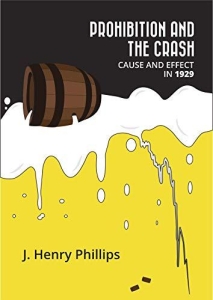
Get the big picture in Prohibition and The Crash on Amazon Kindle in two languages. After this you’ll be able to explain to economists exactly how fanaticism and loss of freedom wrecked the U.S. economy.
Prohibition and The Crash, on Amazon Kindle (link)
ASYLUM APPLICATION FORM i589 INSTRUCTIONS IN PORTUGUESE: INSTRUÇÕES PARA O FORMULÁRIO DE ASILO i589. What we did was make the Political Asylum instructions accessible to and understandable by people accustomed to thinking in Portuguese. This costs one dollar ($1) and you can read it on a cellphone with the Kindle app.(link)
Brazilian Sci-fi from 1926 featuring the adventures of a Rio de Janeiro man-about-town and the beautiful daughter of an elderly scientist–touting alcohol prohibition, eugenics and racial collectivism. Go to Amazon.com and look inside America’s Black President 2228 by Monteiro Lobato, cover art by Rene Bueno, translated by J Henry Phillips (link)






No comments:
Post a Comment