
League of Nations financials had painted a bleak picture in 1926. Drug-crop countries shoved into joining were nearly 10 million gold francs in arrears (roughly $2 million, at 5 to 1 exchange rate). By year's end they were barely $280,000 ahead. March 1927 brought the Nanking Incident (link), a UK-Soviet war scare followed in May, the month the Manly Sullivan Supreme Court decision made dope and liquor profits taxable. German markets tumbled without recovery. The French frank crashed and U.S. tourists there were importuned for police ID cards, yet French stock prices still held strong.(link) Now, January 1929, was the perfect time for U.S. prohibitionists already infiltrating the League with a Permanent Opium Board to exert unrelenting prohibitionist pressure crowding the Opium Advisory Committee to endorse deadlier laws against production and trade worldwide.
 |
| The gap is where League pressure crippled German pharma 13JUL1931 and the drop starts at the Nanking "incident" in which Chinese attacked foreigners--especially Japanese foreigners |
By the 3rd meeting held 18JAN1929, Yanks were upping the ante. Frustrated in their designs, China and the US had stormed out of the 1925 convention, itself an admission that the Hague had balked at unlimited totalitarian repression of the sort now ratcheting up in the American Hemisphere. Warily, discussion turned to how much pressure the Central Opium Board could exert on the Opium Advisory Committee to influence the League Assembly toward coarser coercion. Italian Senator Cavazzoni--rebuffed in his effort to personally infiltrate the Opium Advisory Committee in 1926--likened the Advisory Committee to a cartel-dominated producers' lobby and launched into a tirade against the secrecy of the meeting now in progress. Japan's representative Sato Naotake thought the glare of publicity at that moment would add nothing constructive. Cavazzoni lost on a 6-2 vote in which only China's representative Wang King-ky backed him.
Cavazzoni then went into a tirade citing League of Nations Covenant Article 23 which enlisted WW1 winners and losers alike into a Holy War on whatever Americans chose to regard as a dangerous drug. He falsely asserted that the Central Board was "a child of the League of Nations," indeed, an organ of same, before admitting that the said Sino-American entity was a creation of the 1925 "Geneva" convention. Japan's representative countered, citing the 1925 "convention" as overriding clauses of the 1912 Hague Convention. These had, after all, mutated rapidly until war resulted. The American-made League Charter inserting open-ended reference to future "conventions existing or hereafter to be agreed upon" was mirrored in the Versailles Surrender Treaty, which decreed from on high in its Article 282 that surrender meant surrender to the Hague restrictions on drugs that had started the war in the first place!
Now is a good time to introduce this Italian Senator with his own words spoken at the 8th League Assembly in December of 1927 p67:"What was actually the aim of the League? The defence and progress of civilisation. But it was essential to know the meaning of the word "civilization", which was so often abused. Civilisation did not mean exclusively material well-being. According to the traditions of Christianity, civilisation was synonymous with morality." ... "These social evils — the drug habit, traffic in women, desertion of children, child criminality, the sale of obscene publications — were plagues which stopped at no frontier, and against which the isolated action of a single Government was very frequently insufficient. There accordingly arose a need for common action; and it was well to lay down certain principles which should indicate the road and the boundaries of the social activity of the League."
Get the big picture in Prohibition and The Crash on Amazon Kindle in two languages. After this you’ll be able to explain to economists exactly how fanaticism and loss of freedom wrecked the U.S. economy.
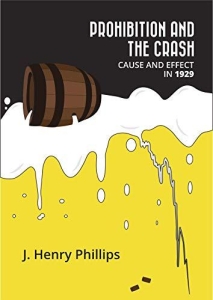
Prohibition and The Crash, on Amazon Kindle (link)

ASYLUM APPLICATION FORM i589 INSTRUCTIONS IN PORTUGUESE: INSTRUÇÕES PARA O FORMULÁRIO DE ASILO i589. What we did was make the Political Asylum instructions accessible to and understandable by people accustomed to thinking in Portuguese. This costs one dollar ($1) and you can read it on a cellphone with the Kindle app.(link)
Comment at Libertariantranslator or LIBtranslator, my political economy blog at https://libertrans.blogspot.com/
Brazilian Sci-fi from 1926 featuring the adventures of a Rio de Janeiro man-about-town and the beautiful daughter of an elderly scientist–touting alcohol prohibition, eugenics and racial collectivism. Go to Amazon.com and look inside America’s Black President 2228 by Monteiro Lobato, cover art by Rene Bueno, translated by J Henry Phillips (link)

I also produce books and articles in Portuguese, using Brazilian historical sources at http://www.expatriotas.blogspot.com or www.amigra.us and in English at http://Libertariantranslator.wordpress.com (link)
My financial history blog, http://www.Libertrans.us, in Portuguese is Expatriotas for Brazilians, readable at www.expatriotas.blogspot.com (link)
Go ahead and comment.

Do you need to contact a certified Translator or Interpreter?

Está procurando tradutor ou intérprete credenciado?


No comments:
Post a Comment