Monday, July 24, 2023

Herbert Hoover and Adolf Hitler


Herbert Hoover tosses Moratorium Bait to Europeans

The Great War of 1914-1918 resulted in the Versailles surrender treaty and several Armistice agreements, all of them bristling with references to chemical drugs and narcotics nobody ever mentions. The Versailles treaty also demanded that Germany pay for damage done by WW1. The US refused to charge Germany reparations but did expect repayment of loans taken by many European nations during that war. Those worthies in turn demanded the German reparations out of which they imagined they'd pay those loans outstanding. Thirteen years later Germans and everyone else were trying everything to get out of those payments. Herbert Hoover "seen his chance" to fasten on another narcotics convention building onto seldom-mentioned  narcotics limitation plans advanced in 1929 and 1930 within the League of Nations.  

On 22APR1931 the Hoover Administration roped Germany into an Extradition Treaty not very different from one entered into earlier with Canada, to allow the US to demand the surrender of alleged "narcotics" law violators. Extradition treaties with Finland and Rumania made no mention of drugs. But treaties made with France, Lithuania, Cuba and Germany while rum, wine and watery beer were treated like narcotics in America did indeed contain drug clauses, viz: Treaty of Extradition. "Crimes or offenses against the laws for the suppression of the traffic in narcotics."

America still held German plants and factories administered by the Alien Property Custodian since the war, and Merck operated a drug plant in the anti-prohibitionist State of New Jersey. The extradition  treaty meant the United States could drag millionaires on the boards of Merck, Farben and other giant conglomerates in handcuffs to the USA to face drug charges. Big Pharma was chafing under reparations. German assets were being held under the "Trading with the Enemy Act" and income tax dangers of the sort jailing Al Capone also loomed. German tycoons viewed with alarm the admittance of representatives from countries that did NOT manufacture drugs to League of Nations bureaucracies urging the passage of drug laws. Banks were collapsing, creditors closing in. Resourceful industrialists looked about them for a champion--any belligerent, xenophobic, populist preacher able to sway the opinions of millions of voters would do. 

Adolf Hitler now obtruded very prominently upon their notice. Headlines had blared for weeks: FORTY THOUSAND GERMAN REPUBLICANS DEMONSTRATE IN BERLIN, GERMANY CRUSHED BY WORLD WAR DEBTS, RIOTS AGAINST EMERGENCY TAXES SPREAD IN GERMANY, REICHSBANK RAISES DISCOUNT RATE TO CURB EXCHANGE DRAIN, NEW MOVEMENT FOR DEBT CANCELLATION, REDUCTION IN REPARATIONS SOUGHT BY GERMANY... Hitler's name appeared in American newspapers after Nazi party vote totals in Oldenberg increased by a factor of five. 

GERMAN DECLARES HOOVER POPULAR IN HIS COUNTRY, Dr Wilhelm Hubben:... communists have been waiting for trouble between fascists and government... Says Hitler Losing--"I am convinced that Hitler, the so-called leader of the Fascists or National Socialists, is losing ground... a man with the ideals of Mussolini and the mustachios of a Charlie Chaplin." "We have no less than fourteen political parties, seven or eight of which are in the lead." See original: (link)

We will searchingly examine how Chinese boycotts enlisted American support for international suppression of plant leaves, extracts and chemical drugs, and ask whether this combination of interests may have unintentionally precipitated global warfare in 1914, then again in 1939. 
*-*-*

Good Reading: Our Man in Tokyo by Steve Kemper. Hoover's ambassador to Japan is kept on the job by FDR. Ambassador Grew struggled through a series of crises oddly synchronized with U.S. and League of Nations tightening of restrictions on all manner of drugs. (link) 



Find out the juicy details behind the mother of all economic collapses. Prohibition and The Crash–Cause and Effect in 1929 is available in two languages on Amazon Kindle, as cheap as a pint of craft beer.
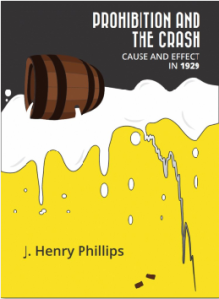
What caused The Crash?

Brazilian Sci-fi from 1926 featuring the Hollywood-style beautiful daughter of a scientist touting prohibition and racial collectivism in America’s Black President 2228 by Monteiro Lobato, translated by J Henry Phillips (link)

Three dollars on Amazon Kindle

Brazilian blog… Expatriotas

American blog… Libertariantranslator, with contact form

Tagged: prohibition, confiscation, asset forfeiture, initiation of force, blackouts, energy crisis, liquidation, liquidity, bankruptcy, Crash, Depression, communism, inviting attack, treason, economic collapse,

Tags: asset forfeiture, bankruptcy, blackouts, communism, confiscation, Crash, Depression, economic collapse, energy crisis, initiation of force, inviting attack, liquidation, liquidity, prohibition, panics, fractional reserve banking,


Wednesday, July 12, 2023

Volstead Act Collapse III, 15-21


Every bank in the USA was shut BEFORE March 1933

thanks to Bert Hoover opening corporate tax returns to scrutiny by State officials 

Sec. 16. Any tax payable upon alcohol under existing law may be collected either by assessment or by stamp as regulations shall provide; and if by stamp, regulations shall issue prescribing the kind of stamp to be used and the manner of affixing and canceling the same.

Sec. 17. When any property is seized for violation of this title it may be released to the claimant or to any intervening party, in the discretion of the commissioner, on a bond given and approved.

Sec. 18. All administrative provisions of internal-revenue law, including those relating to assessment, collection, abatement, and refund of taxes and penalties, and the seizure and forfeiture of property, are made applicable to this title in so far as they are not inconsistent with the provisions thereof.

Sec. 19. All prior statutes relating to alcohol as defined in this title are hereby repealed in so far as they are inconsistent with the provisions of this title.

Sec. 20. That it shall be unlawful to import or introduce into the Canal Zone or have in one’s possession or under one’s control within the Canal Zone, any alcoholic, fermented, brewed, distilled, vinous, malt, or spirituous liquors, except for sacramental, scientific, pharmaceutical, industrial, or medicinal purposes, under regulations to be made by the President, and any such liquors within the Canal Zone in violation hereof shall be forfeited to the United States and seized: Provided, That this section shall not apply to liquor in transit through the Panama Canal or on the Panama Railroad.

That each and every violation of any of the provisions of this section shall be punished by a fine of not more than $1,000 or imprisonment not exceeding six months for a first offense, and by a fine not less than $200 nor more than $2,000 and imprisonment not less than one month nor more than five years for a second or subsequent offense.

That all offenses heretofore committed within the Canal Zone may be prosecuted and all penalties therefor enforced in the same manner and to the same extent as if this Act had not been passed.

Sec. 21. Titles I and III and sections 1, 27, 37, and 38 of title II of this Act shall take effect and be in force from and after the passage and approval of the Act. The other sections of title II shall take effect and be in force from and after the date when the eighteenth amendment of the Constitution of the United States goes into effect.

F H Gillett

Speaker of the House of Representatives.

Thos. R. Marshall

Vice President of the United States and President of the Senate.


In the House of Representatives of the United States.

October 27, 1919.

*-*-*
These wartime then peacetime seizure and forfeiture clauses eroded the U.S. economy over the course of fourteen years. The Bill of Rights melted before them as the Reconstruction Amendments  did when Klan terrorism in the Southern States and Northern reaction against Republican Comstockism combined to unseat Republican control of government. This damage was accelerated by misdefining and prohibiting non-addictive stimulants and lumping them in with habit-forming narcotics. Exporting coercive meddling in trade and production the world over through Versailles Treaty imposition of the Hague Convention followed by planet-wide exportation of prohibitionist coercion until WW2 resulted is up next. The overlap of Volsteadism with the violence of international law will focus on  news, laws, economic and financial crashes and their explanations--especially the way this applied fanaticism brought war with Germany and Japan. 

*-*-*
Good Reading: The Night of January Sixteenth, by Ayn Rand. (link)
That was the date the Wartime Prohibition law became national prohibition of trade, transportation and production, with Federal economic planning adopted at every level to prop it up as it eroded the entire economy and banking system. This novel springs from the legal conundrums created when prohibition eplaced free trade and production.

Good References: The Shaffer Library of Drug Policy. (link) The library covers everything EXCEPT the causal relationship between the violence of prohibitionist law and economic contraction, banking panics, liquidity crises, recessions, depressions and wars. For an introduction to that see Prohibition and The Crash. 


Find out the juicy details behind the mother of all economic collapses. Prohibition and The Crash–Cause and Effect in 1929 is available in two languages on Amazon Kindle, each at the cost of a pint of craft beer.

What caused The Crash?

Brazilian Sci-fi from 1926 featuring the usual beautiful daughter of a scientist touting prohibition and racial collectivism in America’s Black President 2228 by Monteiro Lobato, translated by J Henry Phillips (link)

Three dollars on Amazon Kindle

Brazilian blog…

American blog…

Tagged: prohibition, confiscation, asset forfeiture, initiation of force, blackouts, energy crisis, liquidation, liquidity, bankruptcy, Crash, Depression, communism, inviting attack, treason, economic collapse,

Tags: asset forfeiture, bankruptcy, blackouts, communism, confiscation, Crash, Depression, economic collapse, energy crisis, initiation of force, inviting attack, liquidation, liquidity, prohibition, panics, fractional reserve banking,


Monday, July 3, 2023

Volstead Act Collapse III, 12-14, General Provisions


Panic cartoon during 1905 China boycott of U.S. goods

The U.S. responded with the Pure Food and Drugs Act of 1906 which required morphine labeling and caused The Panic, then the Hague Opium Convention of 1909, which caused WW1. Surely you recall these from history class, no?

GENERAL PROVISIONS.


SEC. 12. The penalties provided in this title shall be in addition to any penalties provided in title 2 of this Act, unless expressly otherwise therein provided.

SEC. 13. The commissioner shall from time to time issue regulations respecting the establishment, bonding, and operation of industrial alcohol plants, denaturing plants, and bonded warehouses authorized herein, and the distribution, sale, export, and use of alcohol which may be necessary, advisable, or proper, to secure the revenue, to prevent diversion of the alcohol to illegal uses, and to place the nonbeverage alcohol industry and other industries using such alcohol as a chemical raw material or for other lawful purpose upon the highest possible plane of scientific and commercial efficiency consistent with the interests of the Government, and which shall insure an ample supply of such alcohol and promote its use in scientific research and the development of fuels, dyes, and other lawful products.

SEC. 14. Whenever any alcohol is lost by evaporation or other shrinkage, leakage, casualty, or unavoidable cause during distillation, redistillation, denaturation, withdrawal, piping, shipment, warehousing, storage, packing, transfer, or recovery, or any such alcohol the commissioner may remit or refund any tax incurred under existing law upon such alcohol, provided he is satisfied that the alcohol has not been diverted to any illegal use: Provided, also, That such allowance shall not be granted if the person claiming same is indemnified against such loss by a valid claim of insurance.

*-*-*

The Association Against the Prohibition Amendment organized to oppose the 18th amendment because it damaged the economy. The mention of revenue in Section 13 above was a sop to all who fretted for good reason. The alcohol tax had brought in about 30 to 40% of all federal tax revenue prior to the amendment's enactment, and personal income tax rates were raised to compensate for the lost revenue. Yet none of the pro or con activists reckoned on the collapse of credit from padlockings, confiscations, asset forfeiture, tax-evasion fines and prison sentences plus the increased income tax would do to the fractional reserve banking system once accountholders withdrew their deposits. Some withdrew to avoid confiscation, others to escape the bank collapse when bootleggers suddenly withdrew their deposits in the same bank. 

Good Reading: The Scramble fo China by Robert Bickers. (link) Foreign Devils, our ancestors, began hauling Indian opium to China in 1808, when the drug was a chi-chi luxury. Like othr luxuries then and now, overreaction, envy, superstition and cussedness fanned it into a crisis all out of proportion. The Engish is impeccable, the writing subtle, economical and powerful. Yet the author skips what to Americans is a key sequence of events leading to the Species circular, the Central Bank struggle and the Panic of 1837. The Foreign Devils knew in March they were unwelcome and sure enough were asked to leave in December. Nor is there anywhere in the literature an accounting of how the Emperor's displeasure affected American opium traders, and through them worsened the effect of the British withdrawal of capital to arm for the Opium Wars. But the book is nevertheless a worthwhile read and includes a charming history of early Singapore.

Our Man In Tokyo is another good book I'm still reading. Already it is clear the author ignores events in Geneva which led to the 1929 Crash, Hoover's appointment of Harry Anslinger and the dumping of narcotics in These States to raise reparations money, pay war debts, rearm Germany and strengthen Japan's huge income from export of stimulants the U.S. sought to prohibit all over the world. This is a deeply ingrained pattern. On the one hand the USA commandeers other governments into armed prohibition of drugs unimportant before they were banned by the Quing. Yet with all the money and coercion invested, major events take place in an eerie media silence. Even the dates of League of Nations Opium Advisory Committee sessions are difficult to ascertain without contacting Geneva and signing a nondisclosure form. 


Find out the juicy details behind the mother of all economic collapses. Prohibition and The Crash–Cause and Effect in 1929 is available in two languages on Amazon Kindle, each at the cost of a pint of craft beer.

What caused The Crash?

Brazilian Sci-fi from 1926 featuring the usual beautiful daughter of a scientist touting prohibition and racial collectivism in America’s Black President 2228 by Monteiro Lobato, translated by J Henry Phillips (link)

Three dollars on Amazon Kindle

Brazilian blog…

American blog…

Tagged: prohibition, confiscation, asset forfeiture, initiation of force, blackouts, energy crisis, liquidation, liquidity, bankruptcy, Crash, Depression, communism, inviting attack, treason, economic collapse,

Tags: asset forfeiture, bankruptcy, blackouts, communism, confiscation, Crash, Depression, economic collapse, energy crisis, initiation of force, inviting attack, liquidation, liquidity, prohibition, panics, fractional reserve banking

Saturday, May 13, 2023

Volstead Act Collapse III, 10-11


Government poisoning of alcohol began in 1906.

TAX-FREE ALCOHOL

SEC. 10. Upon the filing of application and bond and issuance of permit denaturing plants may be established upon the premises of any industrial alcohol plant, or elsewhere, and shall be used exclusively for the denaturation of alcohol by the admixture of such denaturing materials as shall render the alcohol, or any compound in which it is authorized to be used, unfit for use as an intoxicating beverage.

SEC. 11. Alcohol produced at any industrial alcohol plant or stored in any bonded warehouse may, under regulations, be withdrawn tax-free as provided by existing law from such plant or warehouse for transfer to any denaturing plant for denaturation, or may, under regulations, before or after denaturation, be removed from any such plant or warehouse for any lawful tax-free purpose.

Spirits of less proof than one hundred and sixty degrees may, under regulations, be deemed to be alcohol for the purpose of denaturation, under the provisions of this title.

Alcohol may be withdrawn, under regulations, from any industrial plant or bonded warehouse tax free by the United States or any governmental agency thereof, or by the several States and Territories or any municipal subdivision thereof or by the District of Columbia, or for the use of any scientific university or college of learning, any laboratory for use exclusively in scientific research, or for use in any hospital or sanatorium.

But any person permitted to obtain alcohol tax free, except the United States and the several States and Territories and subdivisions thereof, and the District of Columbia, shall first apply for and secure a permit to purchase the same and give the bonds prescribed under title II of this Act, but alcohol withdrawn for non-beverage purposes for use of the United States and the several States, Territories and subdivisions thereof, and the District of Columbia may be purchased and withdrawn subject only to such regulations as may be prescribed.

 - - -

When Theodore Roosevelt was President and Commander of the War Against Race Suicide, someone in Washington came up with the brilliant idea of adding poisonous wood alcohol to ethanol. This was referred to as "denaturation," lest voters decipher any glimmer of comprehension that the Political State had opted for deliberate blinding and actual murder by poisoning of U.S. residents reacting with insufficient smartness and obeisance to the high excise tax Christianity saw fit to impose on the Demon Rum.

* * * 


Find out the juicy details behind the mother of all economic collapses. Prohibition and The Crash–Cause and Effect in 1929 is available in two languages on Amazon Kindle, each at the cost of a pint of craft beer.

What caused The Crash?

Brazilian Sci-fi from 1926 featuring the usual beautiful daughter of a scientist touting prohibition and racial collectivism in America’s Black President 2228 by Monteiro Lobato, translated by J Henry Phillips (link)

Three dollars on Amazon Kindle

Brazilian blog…

American libertarian blog…

Tagged: prohibition, confiscation, asset forfeiture, initiation of force, blackouts, energy crisis, liquidation, liquidity, bankruptcy, Crash, Depression, communism, inviting attack, treason, economic collapse,


Sunday, March 12, 2023

Volstead Act Collapse III 5-9


The Atlantic Highlands raids, 16OCT1929 caught more than rum (link)

Continuation of Volstead Act Title 3...

INDUSTRIAL ALCOHOL, PLANTS AND WAREHOUSES

SEC. 5. Any tax imposed by law upon alcohol shall attach to such alcohol as soon as it is in existence as such, and all proprietors of industrial alcohol plants and bonded warehouses shall be jointly and severally liable for any and all taxes on any and all alcohol produced thereat or stored therein. Such taxes shall be a first lien on such alcohol and the premises and plant in which such alcohol is produced or stored, together with all improvements and appurtenances thereunto belonging or in any wise appertaining.

SEC. 6. Any distilled spirits produced and fit for beverage purposes remaining in any bonded warehouse on or before the date when the eighteenth amendment of the Constitution of the United States goes into effect, may, under regulations, be withdrawn therefrom either for denaturation at any bonded denaturing plant or for deposit in a bonded warehouse established under this Act; and when so withdrawn, if not suitable as to proof, purity, or quality for other than beverage purposes, such distilled spirits shall be redistilled, purified, and changed in proof so as to render such spirits suitable for other purposes, and having been so treated may thereafter be denatured or sold in accordance with the provisions of this Act.

SEC. 7. Any distillery or bonded warehouse heretofore legally established may, upon filing application and bond and the granting of permit, be operated as an industrial alcohol plant or bonded warehouse under the provisions of this title and regulations made thereunder.

SEC. 8. Alcohol may be produced at any industrial alcohol plant established under the provisions of this title, from any raw materials or by any processes suitable for the production of alcohol, and, under regulations, may be used at any industrial alcohol plant or bonded warehouse or sold or disposed of for any lawful purpose, as in this act provided.

SEC. 9. Industrial alcohol plants and bonded warehouses established under the provisions of this title shall be exempt from the provisions of sections 3154, 3244, 3258, 3259, 3260, 3263, 3264, 3266, 3267, 3268, 3269, 3271, 3273, 3274, 3275, 3279, 3280, 3283, 3284, 3285, 3286, 3287, 3288, 3289, 3290, 3291, 3292, 3293, 3294, 3295, 3302, 3303, 3307, 3308, 3309, 3310, 3311, 3312, 3313, 3314, and 3327 of the Revised Statutes; sections 48 to 60, inclusive, and sections 62 and 67 of the Act of August 27, 1894 (Twenty-eighth Statutes, pages 563 to 568) and from such other provisions of existing laws relating to distilleries and bonded warehouses as may, by regulations, be declared inapplicable to industrial alcohol plants and bonded warehouses established under this Act.

Regulations may be made embodying any provision of the sections above enumerated.

* * *

This was passed over President Wilson's veto 27OCT1919, a month after the President suffered a stroke. The Treaty of Versailles, with its restrictions on drugs, took effect September 10, together with the Convention Relating to the Liquor Traffic in Africa, at Saint-Germain-en-Laye the same day. The idea was to prevent the dumping of liquor in Africa where narcotics were heretofore dumped on colonies of opiate-refining nations such as Great Britain, Belgium, Germany and France. Herbert Hoover was warning the US might get dragged back into a resurgent war if Germany's surrender, signed in June, weren't firmly accepted. Besides China, the USA was the only country that made smoking opium illegal, and was the only country besides Russia sufficiently dominated by religious collectivists to declare beer and weak wine federal crimes. 

Europeans could not help but have mixed feelings over a government bound by such strict puritanical coercion suddenly dictating to Europe drug prohibitionism popular only in China. China's 1911 revolution giving absolute power to fanatical prohibitionists had--with American help--precipitated the World War in the first place. American policies were closely scrutinized by all of Europe from 1919 through 1929, and many U.S. laws and court cases made European practices--such as dumping narcotics and stimulants in the USA to pay off war loans and reparations--dangerous to the point of destabilization. 

* * *


Find out the juicy details behind the mother of all economic collapses. Prohibition and The Crash–Cause and Effect in 1929 is available in two languages on Amazon Kindle, each at the cost of a pint of craft beer.

What caused The Crash?

Brazilian Sci-fi from 1926 featuring the usual beautiful daughter of a scientist touting prohibition and racial collectivism in America’s Black President 2228 by Monteiro Lobato, translated by J Henry Phillips (link)

Three dollars on Amazon Kindle

Brazilian blog…

American libertarian blog…

Tagged: prohibition, confiscation, asset forfeiture, initiation of force, blackouts, energy crisis, liquidation, liquidity, bankruptcy, Crash, Depression, communism, inviting attack, treason, economic collapse,


Tuesday, February 14, 2023

Volstead Act World War III, 1-4

Typical German poster in 1919 (link)

 Title III.


INDUSTRIAL ALCOHOL.

Sec. 1. When used in this title—

The term “alcohol” means that substance known as ethyl alcohol, hydrated oxide of ethyl, or spirit of wine, from whatever source or whatever processes produced.

The term “container” includes any receptacle, vessel, or form of package, tank, or conduit used or capable of use for holding, storing, transferring, or shipment of alcohol.

INDUSTRIAL ALCOHOL PLANTS AND WAREHOUSES.

Sec. 2 Any person now producing alcohol shall, within thirty days after the passage of this Act, make application to the commissioner for registration of his industrial alcohol plant, and as soon thereafter as practicable the premises shall be bonded and permit may issue for the operation of such plant, and any person hereafter establishing a plant for the production of alcohol shall likewise before operation make application, file bond, and receive permit.

Sec. 3. Warehouses for the storage and distribution of alcohol to be used exclusively for other than beverage purposes may be established upon filing of application and bond, and issuance of permit at such places, either in connection with the manufacturing plant or elsewhere, as the commissioner may determine; and the entry and storage of alcohol therein, and the withdrawals of alcohol therefrom shall be made in such containers and by such means as the commissioner by regulation may prescribe.

Sec. 4. Alcohol produced at any registered industrial alcohol plant or stored in any bonded warehouse may be transferred under regulations to any other registered industrial alcohol plant or bonded warehouse for any lawful purpose.

***

The wartime version of the Volstead Act had been in effect since mid-1919 as a sort of test to see how far Americans can be pushed toward a Centrally Planned Economy. 

Russia had just such a law beginning after China's 1911 opium ban caused a glut in the Balkans out of which WW1 emerged as competition for primacy in drug markets. American alcohol prohibition took effect in summer, 1919. The Czar had been murdered the previous, year, after six years of alcohol prohibition. Congress was understandably alarmed, but not so much as following the Soviet debt repudiation announced six months earlier. After all, Russia's revolution and the separate peace of March 1918 forced the USA to resort to conscription and enter the war lest the Allies lose to Germany and default on their war loans. Imagine the embarrassment if alcohol prohibition were to topple the Czar and lose the war triggered by American efforts to defuse a boycott by making China's drug prohibitions a worldwide encumbrance!  

Only much later would it surface that industrial alcohol accounted for a tiny fraction of illegal liquor. What bothered voters was the continued addition of mutilating deadly poison to industrial alcohol used for such things as fuel and reagents. Before prohibition, with unpoisoned alcohol readily avaliable, resentment of deliberate government poisoning of citizens was not widespread. 

***


Find out the juicy details behind the mother of all economic collapses. Prohibition and The Crash–Cause and Effect in 1929 is available in two languages on Amazon Kindle, each at the cost of a pint of craft beer.

What caused The Crash?

Brazilian Sci-fi from 1926 featuring the usual beautiful daughter of a scientist touting prohibition and racial collectivism in America’s Black President 2228 by Monteiro Lobato, translated by J Henry Phillips (link)

Three dollars on Amazon Kindle

Brazilian blog…

American libertarian blog…

Tagged: prohibition, confiscation, asset forfeiture, initiation of force, blackouts, energy crisis, liquidation, liquidity, bankruptcy, Crash, Depression, communism, inviting attack, treason, economic collapse,


Sunday, December 4, 2022

Volstead Act Collapse, II-39


Dry fanatics regarded Prohibition as "the" Constitution (link)

SEC. 38. The Commissioner of Internal Revenue and the Attorney General of the United States are hereby respectively authorized to appoint and employ such assistants, experts, clerks, and other employees in the District of Columbia or elsewhere, and to purchase such supplies and equipment as they may deem necessary for the enforcement of the provisions of this Act, but such assistants, experts, clerks, and other employees, except such executive officers as may be appointed by the Commissioner or the Attorney General to have immediate direction of the enforcement of the provisions of this Act, and persons authorized to issue permits, and agents and inspectors in the field service, shall be appointed under the rules and regulations prescribed by the Civil Service Act: Provided, That the Commissioner and Attorney General in making such appointments shall give preference to those who have served in the military or naval service in the recent war, if otherwise qualified, and there is hereby authorized to be appropriated, out of any money in the Treasury not otherwise appropriated, such sum as may be required for the enforcement of this Act including personal services in the District of Columbia, and for the fiscal year ending June 30, 1920, there is hereby appropriated,  out of any money in the Treasury not otherwise appropriated, the sum of $2,000,000 for the use of the Commissioner of Internal Revenue and $100,000, for the use of the Department of Justice for the enforcement of the provisions of this Act, including personal services in the District of Columbia and necessary printing and binding.

SEC. 39. In all cases wherein the property of any citizen is proceeded against or wherein a judgment affecting it might be rendered, and the citizen is not the one who in person violated the provisions of the law, summons must be issued in due form and served personally, if said person is to be found within the jurisdiction of the court. 

* * *

Prohibition was palmed off as the will of the people, eager to have men with guns stop, search, arrest, fine, jail them and confiscate their property--all of this on the understanding that The Economy would benefit from these layers of coercive regulation and enforcement. So why was so much money needed to pay for the deadly force needed to enforce this popular enactment? Gold was $20.67182 per Troy ounce so the enforcement cost then worked out to 101596 Troy ounces of gold, which at $1804.30 each put the initial, hypothetical cost of enforcement at $183 million at today's gold prices. But that wasn't enough to save the economy from sin. Just after the Crash, John J Raskob estimated prohibition enforcement to cost $900 million 1930 dollars. Other sources in 1932 calculated enforcement at 370 million gold dollars or 32 billion of today's gold dollars. The record shows this did the opposite of save the economy. 

This appeared 23FEB1929, not 21FEB (link)

Meanwhile, European countries desperate for cash to pay World War loan debts and reparations charges could not help but see the line of ships hovering off the U.S. coast as an opportunity to sell other prohibited items for ready cash... 

* * *


Find out the juicy details behind the mother of all economic collapses. Prohibition and The Crash–Cause and Effect in 1929 is available in two languages on Amazon Kindle, each at the cost of a pint of craft beer.

What caused The Crash?

Brazilian Sci-fi from 1926 featuring the usual beautiful daughter of a scientist touting prohibition and racial collectivism in America’s Black President 2228 by Monteiro Lobato, translated by J Henry Phillips (link)

Three dollars on Amazon Kindle

Brazilian blog…

American blog…

Tagged: prohibition, confiscation, asset forfeiture, initiation of force, blackouts, energy crisis, liquidation, liquidity, bankruptcy, Crash, Depression, communism, inviting attack, treason, economic collapse,


1929 League Opium Meeting 9

Mussolini's 1927 message to Italians in the USA, at 12min ( link ) The September 22 Opium meeting in Geneva opened with boring analyses...