1927: The U.S. had been collaborating with China to ban all manner of drugs for 22 years. So France exported a shipment of codeine-laced cough syrup U.S. customs grabbed in New York about the middle of August.
Out of nowhere came the September 9 news story that France had slapped a 400% tariff on a wide range of American exports already enroute to France. Word of the cough syrup shipment seizure leaked out in a small newspaper (link) while the League of Nations was in one of its dope temperance conventions in Geneva, Switzerland. American infiltrators were lobbying for explicit international export-import controls to be applied to codeine--a morphine product similar to heroin which the United States shifted to after banning manufacture of heroin itself. Precisely because of those restrictions, many European pharmaceutical companies had switched to producing codeine for the more laissez-faire regulatory treatment this novel morphine derivative enjoyed.
French officials denied there was any connection between U.S. refusal to give France a refunding loan--in essence refinancing French repayment of money borrowed to fight WW1--and France's sudden markup of tariff rates. British officials had likewise tried since the armistice to make repayment of US loans contingent on German payment of war reparations to Great Britain stipulated in the Treaty of Versailles, but President Coolidge rejected the argument. As we've seen, European pharma companies had for roughly a century sold strong pharmaceuticals all over the world, and resented Dry America's warlike interference in honest trade. But Republicans--traditionally unpopular among American farmers--were tickled to have conquered the Philippine Islands as an Open Door for grain shipments to China. China, desperate to exclude foreign drugs from a market its new government had little choice but to monopolize, sought with America's help to protect its homegrown opium régie from foreign competition. France and other nations were also irritated by Americas non-tariff "sanitary" trade barriers. Even Panama, upset that the Canal Zone had turned into a huge stop, search and confiscate racket, questioned whether that was legitimate sovereignty. But the U.S. had bigger fish to fry and agents already in place to influence the League of Nations.
A most unusual agent was Rockefeller Jr, participant in a huge empire of glucose corn sugar that provided the raw material for over 95% of all the alcohol consumed in America. The Argo sugar plant next to Cicero is to this day the world's largest food factory. Just south of Chicago across the Indiana State line the American Maize plant supported the region once made wealthy by the Hammond, Indiana Distilling company. Federal agents now swarmed about those and other glucose sugar plants and were asking Al Capone's brother Ralph about his tax returns. Rockefeller calculated it was prudent to curry government favor by donating a couple million dollars to the financially-strapped League of Nations--the sort of thing Andrew Carnegie had been doing for decades. (link)
The other prong of the pincer movement Commander-in-Chief Coolidge was tightening about France was the American Legion's first conference outside the USA, to be held in Paris. While Geneva filled up with prohibition activists presenting as peace-mongers, Paris began bulging at the seams with the arrival of the same soldiers and officers that 9 years earlier had asfixiated Germans in their trenches with barrages including lewisite, chlorine, mustard gas and high explosives. French officials had picked a bad time to pressure Uncle Sam to let their codeine past customs. Nine days after "tariff trade war" hit the headlines, Paris was surrounded and occupied by raucously tipsy veterans eager to support President Coolidge and Make America Get Paid Again! Headlines blared STIRRING ADDRESSES BY FOCH AND PERSHING AT
LEGION SESSION—CONVENTION HALL RESOUNDS WITH CHEERS FOR TWO MILITARY LEADERS,
FRENCH MARSHAL PAYS TRIBUTE TO AMERICAN GENERAL'S DEVOTION TO COMMON CAUSE OF
ALLIES—(link) Other stories told of Marines mopping up Nicaraguan resistance; still others of terrifying situations in Shanghai, a major international drug bazaar. (link)
One headline read:U.S. REPLIES TO TARIFF NOTE—Paris Sept20—The
reply of the American government regarding representations made by the United
States Embassy on the new French tariff rates was received at the Embassy
today... (link) At the U.S. Department of State, a lot was going on behind the scenes.(link) (link)
Good reading: The Man Who Solved the Market, by Gregory Zuckerman(link) is a highly worthwhile book for anyone interested in the mechanism by which faith-based prohibitionist asset-forfeiture orgies wreck an economy then fabricate lies to conceal what actually happened--as in 1907, 1929, 1931, 1987 and 2008. As a biography it will endear anyone who ever flunked partial differential equations to main character Jim Simons, a pioneer of quantitative trading. To help understand the method consider Bernard Baruch, who made money by noticing in 1891 that whenever an optimist placed outsized bets on a saloon roulette wheel, he lost. Baruch decided the wheel must be gaffed and simply made small bets opposite the high bettor. If the mark bet red, Bernie chose black, if odd, even. Baruch's strategy earned him a steady income until the equally perceptive saloon owner invited him to never come back. Simon had before him 1986 Know-Your-Customer bank customer interrogations, the 1988 Omnibus Drug Bill(link), 1990s implementation of prohibitionist looting under color of law, including entire banks(link), the Money Laundering and Financial Crimes Strategy Act of 1998 signed as Public Law 105-310 on 30OCT1998 as banks in Latin America drowned in hyperinflation and collapse. After a decade of this even politicians had by Summer 1999 become alarmed(link). After non-alcoholic Sand People knocked down NY skyscrapers, Bush doubled down, coining "narco-terrorism" in 2003 as pretext to confiscate more homes and bank accounts(link). This practice was promptly adopted by looter governments everywhere. But the death blow to mortgage-backed derivatives markets came when thermal imaging & helicopters informed on forfeitable hemp houses, marijuana farms and related assets & goods.(link) (link) (link) Looking at data gathered way before the tremors that prompted the Kerry Report, Just Say No and Drug-Free America crusades, Simons would have had to have been a pretty slow mathematician not to notice that government looting under color of eugenic prohibitionism was wrecking the economy. It had occurred in 1907, 1914, 1929, 1970, 1974, 1980, 1982 & 1990.(link) Renaissance Technologies' $5.2B Medallion Fund--launched in 1988 after the Drug Enforcement, Education, and Control Act of 1986--which segued seamlessly into the 1987 Reagan Crash. This pioneering Big Data fund doubled its earnings in 2006, then earned $7.1B in 2007 and $7.9B in 2008. Those facts indicate Simons understood what was going on--even as suckers inconveniently struggled to disbelieve that mortgage-backed derivatives were melting like a waterlogged fairytale witch in OZ.(link) Swindlers straight out of The Emperor's New Clothes(link) still spray verbiage to explain away the 2008 Crash as ANYTHING BUT what Ayn Rand explained in her 1966 Capitalism, The Unknown Ideal: "A nationwide depression, such as occurred in the United States in the thirties, would not have been possible in a fully free society. It was made possible only by government intervention in the economy—" Yet like the little child in the story, who saw and said "But he has nothing on," Ayn Rand's hypothesis fits the facts. Simons doubtless had this figured out, but had better sense than to tip his hand after raking in the chips.
Cool stuff: Mellow Mood Imports has clothes 'n stuff you can dance in.(link) Charleston, North Carolina was where attorney Manly Sullivan was charged with violating the National Prohibition Act. He appealed and won on the argument that forcing him to declare and pay taxes on illegal income was a violation of the Fifth Amendment. The Charleston promptly became America's signature popular dance. This is a family-owned and operated small business in the spirit of American free enterprise.
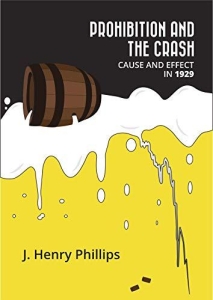
Get the big picture in Prohibition and The Crash on Amazon Kindle in two languages. After this you’ll be able to explain to economists exactly how fanaticism and loss of freedom wrecked the U.S. economy.
Prohibition and The Crash, on Amazon Kindle (link)
ASYLUM APPLICATION FORM i589 INSTRUCTIONS IN PORTUGUESE: INSTRUÇÕES PARA O FORMULÁRIO DE ASILO i589. What we did was make the Political Asylum instructions accessible to and understandable by people accustomed to thinking in Portuguese. This costs one dollar ($1) and you can read it on a cellphone with the Kindle app.(link)
Brazilian Sci-fi from 1926 featuring the adventures of a Rio de Janeiro man-about-town and the beautiful daughter of an elderly scientist–touting alcohol prohibition, eugenics and racial collectivism. Go to Amazon.com and look inside America’s Black President 2228 by Monteiro Lobato, cover art by Rene Bueno, translated by J Henry Phillips (link)







No comments:
Post a Comment