
The Fourth 1929 Meeting of the League of Nations Opium Advisory Committee began the afternoon of 18JAN1929 with secret jockeying for places by the European Opium Advisory Committee and the U.S.-organized Central Opium Board. Their combined eloquence failed to convince Japan's representative that the two organizations ought to mingle their powers. Part of the problem was that the U.S.-managed 1925 Geneva Convention, did not focus on opium—the standard addictive narcotic already dealt with in ratified conventions. The American Delegation sought to extend unto Europe and Asia violent repression of derivative narcotics such as morphine, heroin... plus things known to be harmless compared to cigarettes.
After all, before the Volstead Act became enforceable, the strongest liquor in America was 43% alcohol. Under Volsteadism, 200-proof ethanol became readily obtainable--to the surprise of dry zealots. Beyond that, the U.S. delegation—packed with many anti-everything Volsteadists, famous for having stormed out of earlier League meetings—insisted on adding Holy Wars against non-habit-forming cocaine and even marijuana, a non-toxic, non-habituating herb dangerous to nobody outside of the cigarette industry. Of the Monroe-indoctrinated Latin American countries, only Salvador had "freely" ratified this new prohibition pact. Surinam and Curaçao were pulled in by Netherlands adherence. Of the marijuana/hashish using Moslem countries in which alcohol was traditionally banned only Sudan—long coveted by British Christians—had joined the 27 ratifiers of the 1925 prohibition pact. This word-frequency ngram shows how often the words turned up in print.

The conundrum noticed by Japan's delegate hinged on the meaning of Treaty of Versailles (and League of Nations Covenant) Article 23, which was mentioned nine times during the discussions on January 18, 1929. Article 23, paragraph c, of the Covenant provided that that the members of the League would "entrust the League with the general supervision over agreements with regard to the traffic in opium and other dangerous drugs." When such verbiage was part of the 1912 Opium Convention Protocol that (in my view) caused WW1 only five signatures were affixed between 1914 and 1918.
After the
war, the surrender Treaty of Versailles' Article 23 said: Subject to and
in accordance with the provisions of international conventions existing or
hereafter to be agreed upon, the Members of the League: ... c. will entrust
the League with the general supervision over the execution of agreements with
regard to the traffic in women and children, and the traffic in opium and other
dangerous drugs... The two similar Articles 23 together empowered the League to press
prohibition of anything and everything American delegates could get tacked on
afterward. All this was spelled out in Versailles Article 295 which forced the Hague Convention on victor and vanquished alike. To confuse matters
further, ANOTHER Article 23, this one contained in the U.S.-backed 1925 Geneva
Convention read:
"In order to complete the information of the Board as to the disposal of the supply of the world's raw opium, the governments of the countries where the use of raw opium is temporarily authorized shall, in a manner to be prescribed by the Board, in addition to the statistics provided for in Geneva Article 22 (production, manufacture, stocks, consumption and amounts confiscated of everything except possibly alcohol and tobacco), forward annually to the Board, within three months after the end of the year, as complete and accurate statistics as possible relative to the preceding year showing: Manufacture and consumption of prepared opium… etc…
Japan's
delegate had spied in this multiplicity of Articles 23 an opening for
transferring Opium Advisory Committee statistical analysis duties to the new
and officious Permanent Central Opium Board the Americans had half-shoehorned
into the existing League organization chart. The combined load of largely
invented statistics could be counted on to keep Yank Board snoops too busy to
meddle in the delicate work of the Opium Advisory Committee—clearly a win-win
situation.
Financial and economic considerations also carried weight. British India had for a century sold opium to China. France controlled a large opium-producing colony in what is now Vietnam, and was then the world's leading exporter of heroin. Out of Christian concern for the natives of their colonies in Java, the Dutch had gradually shut down opium production in favor of coffee and coca farming. The latter soon dwarfed all that South America could produce. Traditionally hostile to opium, the Japanese likewise recognized in coca a harm-reducing cash crop, and Formosa, today's Taiwan, became home to many coca shrubs. Dutch and Japanese delegates at League of Nations functions were naturally inclined to steer conversation away from the evils of coca, just as representatives of Arab nations were unamused by ignorant sermonizing on hemp "addicts." European delicacy and etiquette also eschewed mention of America's violent prohibition of beer, wine and liquor. This was not made any easier by the world's first talkie, "Lights of New York" featuring bootleg murders, rum runners, hijackers and squealers being "taken for a ride."
Get the big picture in Prohibition and The Crash on Amazon Kindle in two languages. After this you’ll be able to explain to economists exactly how fanaticism and loss of freedom wrecked the U.S. economy.
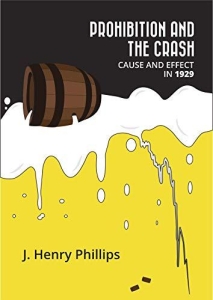
Prohibition and The Crash, on Amazon Kindle (link)

ASYLUM APPLICATION FORM i589 INSTRUCTIONS IN PORTUGUESE: INSTRUÇÕES PARA O FORMULÁRIO DE ASILO i589. What we did was make the Political Asylum instructions accessible to and understandable by people accustomed to thinking in Portuguese. This costs one dollar ($1) and you can read it on a cellphone with the Kindle app.(link)
Comment at Libertariantranslator or LIBtranslator, my political economy blog at https://libertrans.blogspot.com/
Brazilian Sci-fi from 1926 featuring the adventures of a Rio de Janeiro man-about-town and the beautiful daughter of an elderly scientist–touting alcohol prohibition, eugenics and racial collectivism. Go to Amazon.com and look inside America’s Black President 2228 by Monteiro Lobato, cover art by Rene Bueno, translated by J Henry Phillips (link)

I also produce books and articles in Portuguese, using Brazilian historical sources at http://www.expatriotas.blogspot.com or www.amigra.us and in English at http://Libertariantranslator.wordpress.com (link)
My financial history blog, http://www.Libertrans.us, in Portuguese is Expatriotas for Brazilians, readable at www.expatriotas.blogspot.com (link)
Go ahead and comment.

Do you need to contact a certified Translator or Interpreter?

Está procurando tradutor ou intérprete credenciado?


No comments:
Post a Comment