Americans v League of Nations, 2nd Meeting JAN1929
17JAN1929 marked 25days since the large seizure of addictive opiates and non-habit-forming cocaine at New York.(link) League medical experts at the 2nd Opium Advisory meeting quibbled over U.S. insistence on adding benzylmorphine to the index of drugs singled out for stringent regulation same as benzyolmorphine with the extra "o." A Swiss M.D. asserted the former was non-habit-forming. One of the U.S. allies seated on the Permanent Central Opium Committee auditing Opium Advisory Committee meetings pointed out that the concoction included more than 2% morphine. This U.S.-dominated committee had been meeting for close to two weeks already.
Already the vagueness of terms like "habit" and "addiction" were being exploited by Americans. U.S. laws back then banned sauerkraut for containing 0.5% alcohol as a result of natural fermentation. Future President Ronald Reagan--18 years old when League partisans tried to palm off certain opiates as non-habit-forming--would inherit the opposite tendency. Reagan's Republican partisans would undertake to override medical science to declare stimulating South American and Indonesian plant leaves "addictive" by political fiat--to the profit and amusement of tobacco peddlers--and whiskey peddlers by and by.
News items that day in 1929 included reports of a brand-new investigation of the Ku-Klux Klan. That Christian denomination was best-known for violent insistence that Americans of African descent were a much graver menace to the social fabric than the drugs and alcohol supposed by Klan congregants to make make the "race problem" even worse. NY Governor Al Smith--whose "wet" 1928 candidacy had caused the Ku-klux Klan to bolt to the Republican party--pleaded in radio broadcasts for donations for the Democrats. A new plan for collecting German war debts and reparations payments was under discussion--including a debt holiday or moratorium. The most unsettling of recent news stories was coverage of a Senate move to disclose tax returns of those seeking refunds. Next to that, a war involving Bolivia and the abdication of an Afghan king after three days in office were small potatoes.
Seventy-nine years later, in January of 2008, big news items were Citi posts $10 billion loss, cuts 4200 jobs... Bank of America cutting 650 jobs to revamp economy... Dow-Jones industrials falling... Prohibition enforcement buffs were calling for expansion and tougher enforcement of anti-money "laundering" laws passed in 2006. We'll be comparing the run-ups to the 1929 and 2008 Crashes, so stay tuned. Here is how discussions of pot houses (DEA and Methodist White Terror term) and grow houses (libertarian term) hit the media before and during the Bush faith-based asset-forfeiture crash of 2008 brought about by a law passed in 2006.
This Google ngram is the graphic textual effect of faith-based asset forfeiture prohibition looting gone wild. Equity destroyed, the economy in collapse and Christian National Socialism defeated in elections by a more internationalist looter faction.
Good Reading: Former Treasury Secretary Timothy Geithner mentioned Lords of Finance by Liaquat Ahamed. Though good with gossip about the Lords of Creation between the China boycott and WW2, the author seems totally unaware that Germany led the world in chemicals and pharma products in 1914, 1931 and 1939. The book reads as if opium had not yet been discovered and the League of Nations existed for the sole purpose of blaming Germany for WW1. In actuality, the League was organized with American help for the sole purpose of replacing the Hague as lead-car vehicle for violent prohibitionism. This is set forth in Article 23 of the Versailles surrender treaty and of the League Charter--the articles NONE of the Crash explainers notice. "...entrust the League with the general supervision over agreements with regard to the traffic in opium and other dangerous drugs." I'll report back, but so far the book seems another hack job published specifically to troll red herrings across any possible connection between the GW Bush Faith-Based Asset-Forfeiture "sharing" programs urging State and local police to confiscate mortgaged marijuana grow houses and the mortgage-backed derivatives Crash. All evidence indicates that once asset forfeiture losses surpassed burglaries in terms of dollar amounts, the bottom fell out of the mortgage-backed derivatives market PRECISELY because of those uncollectable mortgages. That landslide triggered the avalanche that wrecked the national economy in 2008--the year the book was written--perhaps to memory-hole or explain away any such causal relations.
Notice to Microsoft: Your software makes repeated demands that I let it have access to my Apple photos. If (and this is merely an illustrative hypothetical) those photos were to include compromising images resembling a Microsoft founder or major stockholder at Epstein's Fantasy Island, I'm confident you would understand why I am not inviting Windows to rummage through the files. Kindly quit insisting as I have no plans to end up like McAfee or Epstein. I already have Linux installed on another machine and 2 Macs running.
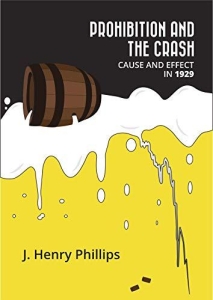
Get the big picture in Prohibition and The Crash on Amazon Kindle in two languages. After this you’ll be able to explain to economists exactly how fanaticism and loss of freedom wrecked the U.S. economy.
Prohibition and The Crash, on Amazon Kindle (link)
ASYLUM APPLICATION FORM i589 INSTRUCTIONS IN PORTUGUESE: INSTRUÇÕES PARA O FORMULÁRIO DE ASILO i589. What we did was make the Political Asylum instructions accessible to and understandable by people accustomed to thinking in Portuguese. This costs one dollar ($1) and you can read it on a cellphone with the Kindle app.(link)
Brazilian Sci-fi from 1926 featuring the adventures of a Rio de Janeiro man-about-town and the beautiful daughter of an elderly scientist–touting alcohol prohibition, eugenics and racial collectivism. Go to Amazon.com and look inside America’s Black President 2228 by Monteiro Lobato, cover art by Rene Bueno, translated by J Henry Phillips (link)







No comments:
Post a Comment