
Tuesday, January 22, 1929, Geneva, Switzerland--Swiss representative Carrière pointed out that Swiss morphine manufactures were down 53% in 1927 compared to 1926, and heroin down 6% that same timeframe. Swiss figures for cocaine were "very small and would probably become still less." The USA snoop on the Permanent Board bristled at the Netherlands report which, like the Swiss report, had started out confidential, but was assured that tardiness, not secrecy, had led to its summarization. The Netherlands offered practically no information whatsoever, and Permanent Central Board snoops were reduced to asking why only 17 kilos of morphine had been produced--yet got no explanation.
Chosen, now called Korea, was next in the hotseat. Naturally, Mr Sato of Japan answered on behalf of that ward of his State and brushed aside inquiries as to the Taisho Drug Manufacturing Co with the assurance they'd been obliged to suspend operations and were answering to the Supreme Court. That cut off any hope of discussing specifics, so Korea's guardian spokesman deftly switched subjects to a wonderful scheme for a government monopoly on morphine along the lines practiced by European nations upon their colonial subjects. In all of Korea, the disinterested experts learned, there were but 5000 addicted, all or nearly all to morphine. These "morphinomaniacs" were treated in shifts and expected to all be cured within 10 years. His patter was so smooth, nobody contested the impression conveyed that coca and cocaine were entirely unheard-of on an island not very far from Java and Sumatra, where opium had been uprooted and coca production had--for nearly two decade--dwarfed that of South America.
The excitable Italian delegate could poke no hole in Sato's story, yet remained unconvinced that rationing dope through a monopoly was a good thing. He raised the usual specter of vulnerability to the sort of people who "enriched themselves through this evil that was afflicting mankind" yes shuffled in platitudes signifying trust that this "shameful part of humanity" would be kept out of operations. Discussion shifted to how Japanese cures taking from 6 to 22 days seemed faster than English treatment of opiate addicts. After Sato expounded on Korea's trivial expected morphine production, a Swiss delegate given to insisting (as a doctor) that codeine was non-habit-forming, sought to pry loose medical details by mentioning that cocaine as a cure for morphine addiction had only turned morphinomaniacs into cocaine "addicts"--a creature the Japanese knew perfectly well did not exist. He then lost all credibility by claiming alcoholism and addiction were psychological phenomena, endorsing either tapering-off or sudden cold-turkey withdrawal as "the only treatment" which had given "positive results." Portugal's delegate, a "former professor of medicine" interjected his agreement and participants evidently managed to keep a straight face.
Greece, bordering opium-producing Turkey, Bulgaria and Serbia was examined next. The Greeks had a fat opium monopoly and shared one of their "free zones" with Serbia. After it transpired that Greek import and Serbian export figures matched perfectly, it became just as clear there was no point in trying to trap them in contradictions; the Persian report was promptly flipped open.
Opium-exporting Persia boycotted tobacco in 1907 while the USA scrambled to pass state and federal laws hobbling all other drugs and recreational beverages. Unable to pay her gendarmes, the Persian government drew up a constitution, hired an American banker to develop a fiscal and banking system--including dope tariffs--and for this was invaded by Christian Russia in 1911, year of the Chinese civil war. Arm-twisted, Persia signed the Hague Opium Convention "with reservations" in 1912. Postwar British occupation only sharpened Persian scorn for Euro-American busybodies and admiration for Japan. Persia, Turkey and Soviet Russia still resisted induction into the League of Nations, yet Persia appeared as a member of the Council. Permanent Board snoops and drug-refining European delegates alike read with undisguised dread of Persia's plans for setting up its own morphine factory. Existing factories already refined far more morphine than America's prohibitionists considered necessary for "legitimate" global needs. Japan's representative dragged a friendly red herring across the discussion by mentioning Turkoman plans to cultivate poppies East of the Caspian Sea, while Great Britain's man pulled out past proposals, aide-mémoires, and added sputtering reproofs, but was mollified by the Secretary's opinion that any such plans were unlikely to go anywhere.
The next meeting would open the afternoon of Tuesday, January 22nd.
Reading: Minutes of the two Geneva Opium (and everything else except cigarettes) Conventions. To my surprise the thing ran to 38 primary meetings--almost thrice that in ancillary meetings--and lasted nearly 70 days covering 500 fine-print, legal-size pages. The tantrums thrown by some of the more hysterical delegates added color to the proceedings, and results--including reefer madness lynching of hemp--spilt over into the 1929 meetings currently being revisited. These 1929 meetings will reveal their own tantrums and hysteria in due course, rest assured. I found this information at a University in India.
I finally bought an Evershop selfie light on Amazon and have resumed photographing the last 6 mos of the 1912 Peking Daily News. The contraption needs a forceps to insert the phone into its too-tight grip, and I had to use a jeweler's loupe to read the bluetooth push-button shutter instructions, but it works. In a test pic the first thing I noticed was a July 1912 Egyptian cigarette ad. Its importance will become clearer once we examine the 1924-25 Geneva Convention proceedings.
 |
| Some interesting facts about industrially manufactured cigarettes: (link) |
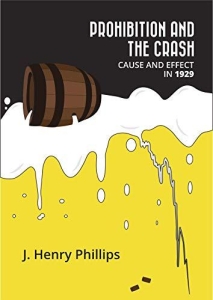
Prohibition and The Crash, on Amazon Kindle (link)

ASYLUM APPLICATION FORM i589 INSTRUCTIONS IN PORTUGUESE: INSTRUÇÕES PARA O FORMULÁRIO DE ASILO i589. What we did was make the Political Asylum instructions accessible to and understandable by people accustomed to thinking in Portuguese. This costs one dollar ($1) and you can read it on a cellphone with the Kindle app.(link)
Comment at Libertariantranslator or LIBtranslator, my political economy blog at https://libertrans.blogspot.com/
Brazilian Sci-fi from 1926 featuring the adventures of a Rio de Janeiro man-about-town and the beautiful daughter of an elderly scientist–touting alcohol prohibition, eugenics and racial collectivism. Go to Amazon.com and look inside America’s Black President 2228 by Monteiro Lobato, cover art by Rene Bueno, translated by J Henry Phillips (link)

I also produce books and articles in Portuguese, plus my own blogs using U.S., Australian, Canadian, Chinese, English, European and South American historical sources at http://www.expatriotas.blogspot.com or www.amigra.us and in English at http://Libertariantranslator.wordpress.com (link)
This financial history blog, http://www.Libertrans.us, in Portuguese is Expatriotas for Brazilians, readable at www.criseeconomica.com (link)

Do you need to contact a certified Translator or Interpreter?

Está procurando tradutor ou intérprete credenciado?


No comments:
Post a Comment