Thursday, May 1, 2025

German, U.S. Spoiler parties, May 1931


Herbert Hoover was inaugurated 2 days after beer was made a felony–while the League of Nations unfolded a worldwide war on drugs. Small wonder that the resulting Great Depression triggered a search for replacement parties here, there and everywhere…
Germany had troubles too. Losing the 1914 war against the Hague opium conventions had burdened the nation with war reparations to the Allies and loan debts to the (NOT an Ally) U.S. By 1930, League plans to throttle German pharma–Germany’s largest industry–had intensified. The U.S. now financially backed these international prohibitionists and packed the Geneva committee with her own delegates. Naturally, the search was on for new politicians. Adolf Hitler’s name began appearing in the news.(link)

The League of Nations Opium Advisory Committee spent nearly all of May 1931 working on the new Drug Convention they’d planned throughout 1930. German participants kept their government dutifully apprised of plans amounting--in the committee’s own words--to a planned economy.(link) Participants, nearly all from producing nations, lobbied for bans on non-toxic and non-addictive drugs to cripple potential competition for their own products and to muddy up the waters with mission creep. South American coca and African khat--both of them stimulants and the exact opposite of narcotics--were scheduled for banning by corporate experts who argued that their own codeine was not addictive. After all, hadn’t Herbert Hoover himself argued that laissez-faire liberalism meant dog-eat-dog? Besides, the League Covenant and Treaty of Versailles, in their respective article 23, entrusted the League of Nations “with the general supervision over agreements with regard to the traffic in opium and other dangerous drugs.” “Other” all of a sudden meant cocaine, marijuana, alcohol, cigarettes, cacti–whatever you could get the League to say was dangerous. “Supervision over agreements” still meant the initiation of deadly force.

Armed with that ambiguity, America’s anti-dog-eat-dog President had Secretary of State Henry Stimson instruct cash-laden American envoys to the convention that “the draft convention proposes to extend certain of the provisions of the convention to other drugs not covered by the Geneva Convention.”(link) If this juggernaut came to be, Germany’s drug-producing competitors could use it to throttle her sales while bleeding the nation into bankruptcy with reparations demands under the Versailles treaty. Since the fix was already in for the antidope convention, national survival required getting rid of the reparations levies. Stories about German demands for a moratorium hit the papers as soon as the drug cartel delegates took their seats.(link) Alert readers will notice the Hitler story a few inches lower in the same column.

Germany stood threatened with confiscation, extradition, income tax liability in the U.S., crippling of primary industries and renewed expropriations as in 1923. The Bank of United States and Al Capone stories in every paper served notice that Americans gleefully used tax laws to prosecute their own to death for dope shipments. The shipment of opiates industrially packaged into “woolens from Northern Germany” just intercepted in New York made those liabilities all the more ominous. Hyperinflation had failed in 1923. Germany needed a political party that was truculent, xenophobic and eager for revenge; Adolf Hitler was the handiest counterthreat to rattle back with. An alternative threat would be to form a customs union with Austria, thereby eliminating local customs barriers.(link) The possibility was aired May 10, and a panicky run on Austria’s Kreditanstalt bank took hold immediately, for reasons completely unclear.
WHAT WAS CLEAR was the perfect correlation between religious fanatics, Comstockist book-burning, bans on contraceptives and desperate missions to outlaw Evolution, beer, wine, drugs, movies and Sunday baseball at all costs–and not just in Pennsylvania.

Tennessee’s Monkey Law had tried and convicted a schoolteacher for heresy in 1927--and the appeals court let it stand in 1931. Quaker President Herbert Clark Hoover thanked the Southern Baptist Convention on Law Enforcement for its role in building a new race via deadly force on May 16. Communists--multiplying geometrically since the 1929 Crash--tended to side with whomever zealots singled out for prosecution. Spanish socialists were keenly alert to the opposition; anti-religious sentiment there pulled no punches. As if to rebuke Pres. Hoover, Christian National Socialists won a sensational victory in the federal state elections at Oldenburg. U.S. papers even tried tried equivocation–announcing on May 18 that Adolf Hitler’s NATIONALIST party scored notably in Danzig Free State elections.(link) There were battle lines being drawn…

Good reading: HERETIC, Jesus Christ and the Other Sons of God, by Catherine Nixey.(link) Yes this is the same spellbinding wordsmith who crafted The Darkening Age. And yes, it is also available with audio interpretation by that best of all voice actresses Lalla Ward. This ought to be must reading for anyone with pretentions at writing ability. I personally feel crushed by her every page. Nowhere is there an awkward moment–and bear in mind that the source material comes from the most awkward languages and dialects. “Apocryphal stories” pops up in Milton Friedman lectures, but Nixey leads down the path to genuine apocrypha--stories that, like Beatles albums or Erskine Caldwell novels--simply had to be put to the torch for your own protection from inconvenient facts of reality.


Find out the juicy details behind the mother of all economic collapses. Prohibition and The Crash–Cause and Effect in 1929 is available in two languages on Amazon Kindle, as cheap as a pint of craft beer.
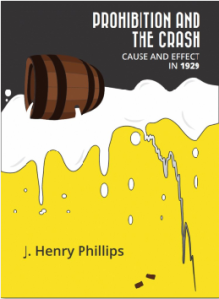
What caused The Crash?

Brazilian Sci-fi from 1926 featuring the Hollywood-style beautiful daughter of a scientist touting prohibition and racial collectivism in America’s Black President 2228 by Monteiro Lobato, translated by J Henry Phillips (link)

Three dollars on Amazon Kindle

Brazilian blog… Expatriotas

American blog… Libertariantranslator, with contact form

ASYLUM APPLICATION FORM i589 INSTRUCTIONS IN PORTUGUESE: INSTRUÇÕES PARA O FORMULÁRIO DE ASILO i589. What we did was make the instructions accessible to and understandable by people accustomed to thinking in Portuguese. This costs one dollar ($1) and you can read it on a cellphone with the Kindle app.(link)


Encircling Germany, March 1931


In March 1931, Republican judges again declared that beer would remain a felony, even if tens of thousands had to be robbed, jailed and/or shot to attain this noble ideal. Prisoners now exceeded the entire populations of three States. What, then, of German hopes to keep codeine and cocaine unregulated so as to pay war reparations with export profits? The clipping below, from when one American penny was worth six-and-a-quarter-MILLION paper marks, explains how other drugs boomed as beer was banned.
“Obviously the creation of a world sentiment against dope is the tremendous task upon which our government has embarked.(link)” Smuggling submarines were photographed in the Hudson river 8 months later.(link) The same Norwalk paper on p.4 tells of Connecticut patrons pelting narcotics agents with brickbats.

By 07 February 1931 the League of Nations Opium advisory Committee had wrapped up its 44 meetings. Only two of which were closed to the public. To this day the League is not very forthcoming about what specifics were discussed. However, the 1930 sessions are amply documented and detail all plans for worsening an existing global market crash, chain-reaction of domino-effect banking panics and liquidity collapse of fractional-reserve banking systems. All was made possible by existing legislation banning beer, wine, liquor, opiates, entheogens, stimulants and all manner of surgical analgesics, thereby increasing their selling prices fourfold. What was now afoot was a plan to export violent Chinese fanaticism and once again so upset the economies of central Europe as to guarantee a second World War. The same process that made WW1 inevitable as of 1912 was shuffled and redealt in 1931–now worsened by lawfare, rent-seeking competitors and efforts to throttle ALL potential competition from Germany and elsewhere.

On 01MAR1931 the Chicago Tribune reported actual civil war in cocaine-exporting Peru, with four dead in the first battle. Germany was an important customer to Peru, whose market had been dwarfed by huge coca plantations in the Dutch colonies of Java and Sumatra. The Dutch replaced addictive narcotic crops with coca shrubs beginning in the 1890s–as a Christian reform measure. The island of Formosa, now Taiwan, was then under Japanese control; there too were plantations of both types of cash crops. Only after alcohol was banned in Georgia did a coca wine company change products, adding a pinch of coke to a non-alcoholic soft drink called Coca Cola. Prohibitionists who enacted the wine ban now insisted the violence of law be inflicted on this replacement soft drink. Officiousness cascaded into a general witchhunt by frustrated prohibitionists looking for new things to ban. Past crusades to have people handcuffed over cigarettes and Sunday baseball were not resonating with voters.

The Hoover administration pressured the League of Nations to export American bans on cocaine, hence the disorder in Peru. Britain’s Indian opium cartel and Egyptian revenue office wanted cannabis banned because it was cheap non-addictive; cocaine, they feared, would cause a trade imbalance such as ruined China in the Opium Wars. Salt the Brits admired as habituating enough to declare a government revenue monopoly in India and many African colonies. Revenue officers gleefully arrested Gandhi and Arab traders for collecting and transporting naturally-occurring salt!

As March headlines blared news of mostly Russian Bank Of United States officers’ criminal indictments, Soviet Russia was balefully regarded for drug-related reasons. Dziga Vertovs’ 1929 movie, Man With A Camera, showed Soviet barmaids popping bottlecaps off of foaming bottles of beer, a passenger snorting a huge packet of white powder at a train station and flashes of stashes of layouts that could only be narcotics (this in the uncut version). Technically-trained Americans disillusioned with religious hatred of laissez-faire started a wave of emigration to the Soviet Union.

New York Russians owned the Bank of United States Milton Friedman imagined to have failed because of anti-Jewish discrimination. The BUS specialized in major narcotics defendants, convicts, bought judges and dead witnesses as depositors and loan customers. Its failure coincided with federal agents staking out a half-ton of morphine unloaded nearby off the French liner Alesia. Friedman and Schwartz might profitably have considered officious confiscation in addition to ku-klux plotting. Indeed, a January 7 NY Times piece described Prohibition and Soviet bigotry as pretty much the same thing. A March series in the Berkeley paper glumly outlined the Bolshevik dictatorship while Treasury agents arrested Russian nationals over counterfeiting, while banks all over failed. Daily news coverage popularized the BUS bank fraud case and tax charges against Capone outfit members. German misgivings increased each time those articles appeared on the same page.

To Narcotics Commissioner Harry Anslinger’s delight, President Hoover on 02March sent Congress a Supplemental Estimate of Appropriation of $35,000 in gold to fund U.S. Participation in the League of Nations Conference on Limitation of the Manufacture of Narcotic Drugs. Former Reichsbank president Schacht the following day demanded revision of all war debts and restitution of Germany’s former colonies in Africa.(link) March 7 & 8 Chicago papers reported that Europeans owed $29 billion to the USA–which had lost another $4 billion trying to enforce prohibition laws. Russia, unrecognized and acting miffed, threatened to boycott all goods made in America. Hoover’s envoys to the Geneva antidope convention, set for May 27, 1931, were Harry Anslinger and John Caldwell, of the Federal Bureau of Narcotics, a eugenicist in charge of “farms” for narcotic reconcentrados and yet another narcotics commissioner.

Reefer madness “awareness” propaganda suddenly poured from newspapers; Henry Ford, Thomas Edison and Harvey Firestone assured readers that “that prohibition is a good thing” and that “the alleged depression is the result of dishonesty.” German National and International Socialists took to shooting each other down in Germany and convicts set fire to a crowded Illinois prison. A tiny article in that issue reported renewed research on mustard gas.(link) As a wake-up call to Americans and Germans alike, Dr Nicholas Murray Butler of Columbia U. told Californians prohibition laws had created a tax-free $4-billion industry and suggested repeal. Americans reflected that untaxed evangelists had started prohibition, while Germans recalled how American tax liability for illegal profits had, in May of 1927, suddenly impoverished most European securities markets.(link) With the 1930 drug extradition treaty in place, German pharma moguls in America could not escape prohibition’s jurisprudence by returning to Europe.

Already a third of all suicides in Europe were Germans, so, to turn up the pressure, a propaganda movie in German and English, “The Seas Beneath” was released as a nostalgic WW1 flick. A deck-gun armed decoy Q-boat tows a hidden U.S. submarine to lure and ambush a U-boat.(link) Over 95% of all alcohol consumed in America was by 1929 made from corn sugar glucose. By 1924 reporters knew that cocaine and narcotics were delivered to hovering Rum Row ships to augment that one-twentieth of the liquor market share. After all, a German submarine brought drugs to the neutral USA in 1916. There were hundreds of European submarines afloat and able to deliver additional drugs to Rum Row vessels, even if the Hudson River was now off-limits.(link) *-*-*

Good reading: CONVENTION FOR LIMITING THE MANUFACTURE AND REGULATING THE DISTRIBUTION OF NARCOTIC DRUGS OF JULY 13TH, 1931. Geneva, October 1937. I bought this from a seller in Holland about 15 years ago. It gives a paragraph-by-paragraph breakdown of this internationalization of the Harrison Act the U.S., China, and League of Nations struggled to fasten onto Germany and Japan. Andrew Jackson would have quipped: “Well, they’ve got their convention; now let’s see them enforce it.”
INTERNATIONAL NARCOTICS CONTROL by L.E.S. Eisenlohr is a Reagan-era “informative” breakdown of history and background for efforts to salvage Comstock and Prohibition legislation following ratification of the 21st amendment and Libertarian voting. Both tomes blankly ignore the possibility that laws seizing banks, warehouses, ships, real estate, homes and other assets could in any way affect securities markets, fractional-reserve banking, and monetary stability–to say nothing of causing World Wars!

The Forbidden Game—A Social History of Drugs, by Brian Inglis, fills this gap.(link) Brian also wrote The Opium War, relating how Chinese prohibitionism versus British Indian rent-seeking caused economic collapse and war.(link)


Find out the juicy details behind the mother of all economic collapses. Prohibition and The Crash–Cause and Effect in 1929 is available in two languages on Amazon Kindle, as cheap as a pint of craft beer.

What caused The Crash?

Brazilian Sci-fi from 1926 featuring the Hollywood-style beautiful daughter of a scientist touting prohibition and racial collectivism in America’s Black President 2228 by Monteiro Lobato, translated by J Henry Phillips (link)

Three dollars on Amazon Kindle

Brazilian blog… Expatriotas

American blog… Libertariantranslator, with contact form

ASYLUM APPLICATION FORM i589 INSTRUCTIONS IN PORTUGUESE: INSTRUÇÕES PARA O FORMULÁRIO DE ASILO i589. What we did was make the instructions accessible to and understandable by people accustomed to thinking in Portuguese. This costs one dollar ($1) and you can read it on a cellphone with the Kindle app.(link)


American blog… Libertariantranslator, with contact form


Sandbagging Germany, April 1931


The Hoover Administration in 1931 needed to elect candidates and coerce Germany–this while robbing and jailing voters over beer, interstate weekending and foreign drugs–all in one juggling act. A typical cartoon sandbags readers by pretending dry Republican “progressives” (who just cost the GOP control of the House) would change policy (link). The prime directive was to ignore the wet Liberal Party. Here are some portentous events of April 1931.

March papers closed with articles on the huge fortunes amassed by the Kaiser (living it up in Holland) and frau Bertha Krupp von Bolen and Halbach, still the boss lady of the Krupp steel and weapons conglomerate, worth 283,000,000 marks.(link) Germany was investing in some brand new warships as well. Americans were meanwhile shocked to learn that illegal liquor had a budget of 5 billion dollars tax-free, while courts and jails were filling up with bootlegging tax dodgers indicted back in 1928.(link)

The doper extradition treaty the U.S. foisted on Germany back in July of 1930 was ratified, proclaimed and now made drug “violators” anywhere in Germany liable to be frogmarched into U.S. courts as of 22APR1931. To the world’s largest manufacturer of drugs, heavily invested in U.S. corporations and in part managed by America’s Alien Property Custodian, this was no laughing matter. There had been a huge bust at Atlantic Highlands in 1929, with encrypted radio station, observatory, docks, roads all located between a submarine overhauling facility and Atlantic City. Codebreakers had been working on collected messages and claimed to have in hand codes for landing–not liquor–but way more valuable drugs. (link)

Coincidentally, New York papers announced 17 boxes containing about 400 pounds each of narcotics worth $3 million wholesale were nabbed on the Hamburg-American pier off the Milwaukee. As in the case of the Alesia— caught unloading morphine as the Bank of United States failed 5 months earlier–details came in a slow trickle. From different NYT articles, readers pieced together the story of a U.S. Hamburg-American liner loaded with 3200 pounds of morphine, 500 pounds of heroin and as much again of opium. Yet the numbers changed every day with a typical overnight discrepancy of 3500 pounds, and only the vaguest hint that the dope was packed in woolen goods and originated “in the north of Germany.”

This embarrassment occurred as the League Opium Advisory Committee was unpacking for its 17th Session, with American and Chinese money piling into its coffers for a strict neo-prohibitionist antidope convention to begin the first week of May. NORDWOLLE was a North German corporation–on a scale with Anheuser-Busch, Argo or Hershey–located in the company town of Delmenhorst some 12 miles from the Bremen rail line leading to the nearby port of Hamburg where the dope evidently was loaded for transport. All mention of that drug shipment vanished from the press. But Nordwolle would soon be in headlines, indebted to the Danat bank, with both teetering on the edge of bankruptcy. *-*-*

Relevant Reading: International Narcotics Control, by L.E.S. Eisenlohr, Geneva, July 1934. Like other official books skirting the topic, this one is long on the “social evil” angle and short on the economic effects of government intervention, confiscations, violent enforcement, deadly reprisal counterforce and the stacks of dead civilians, uniformed cops and plain-clothes agents out to make a crime of trade and production. Everything religious fanatics and rent-seekers eager to benefit from prohibition laws wanted politicians to believe is in there.

Restoring the Libertarian Party is the topic at Third Party Watch.(link) Rather than delete cruel and unusual planks from their platform to compete, God's Own Prohibitionists first packed the courts with Christian National Socialists, then enlisted a fifth column of zealots to infiltrate and corrupt the Libertarian Party. Our formerly leveraged, law-changing sppoiler vote share now looks like this: 


Visit Third Party Watch and help find solutions.


Find out the juicy details behind the mother of all economic collapses. Prohibition and The Crash–Cause and Effect in 1929 is available in two languages on Amazon Kindle, as cheap as a pint of craft beer.

What caused The Crash?

Brazilian Sci-fi from 1926 featuring the Hollywood-style beautiful daughter of a scientist touting prohibition and racial collectivism in America’s Black President 2228 by Monteiro Lobato, translated by J Henry Phillips (link)

Three dollars on Amazon Kindle

Brazilian blog… Expatriotas

American blog… Libertariantranslator, with contact form

ASYLUM APPLICATION FORM i589 INSTRUCTIONS IN PORTUGUESE: INSTRUÇÕES PARA O FORMULÁRIO DE ASILO i589. What we did was make the instructions accessible to and understandable by people accustomed to thinking in Portuguese. This costs one dollar ($1) and you can read it on a cellphone with the Kindle app.(link)


Find out the juicy details behind the mother of all economic collapses. Prohibition and The Crash–Cause and Effect in 1929 is available in two languages on Amazon Kindle, as cheap as a pint of craft beer.

What caused The Crash?

Brazilian Sci-fi from 1926 featuring the Hollywood-style beautiful daughter of a scientist touting prohibition and racial collectivism in America’s Black President 2228 by Monteiro Lobato, translated by J Henry Phillips (link)

Three dollars on Amazon Kindle

Brazilian blog… Expatriotas

American blog… Libertariantranslator, with contact form

ASYLUM APPLICATION FORM i589 INSTRUCTIONS IN PORTUGUESE: INSTRUÇÕES PARA O FORMULÁRIO DE ASILO i589. What we did was make the instructions accessible to and understandable by people accustomed to thinking in Portuguese. This costs one dollar ($1) and you can read it on a cellphone with the Kindle app.(link)


1929 League Opium Meeting 9

Mussolini's 1927 message to Italians in the USA, at 12min ( link ) The September 22 Opium meeting in Geneva opened with boring analyses...